Exclusive Interview
Produced by: Rudy Manager
Edited by: Rudy Manager & Andrej Aroch
IRKO - Multi-Platinum Mixing Engineer Behind Records for Jay-Z and Ye

Multi-platinum, award-winning mixing engineer IRKO has built a career working with some of the most influential names in music, with credits for artists such as Jay-Z, Ye, Mac Miller, and many more. In this Studio Talks interview, IRKO reflects on his early years in Italy, discovering hip-hop, opening his first studio, moving to the United States, his creative routines, and the lessons he has learned from decades in music. We also touch on his favorite tools, thoughts on AI, and the mindset young producers and engineers need if they want to build a successful career in the industry. This interview was conducted via video call by Rudy Manager on June 25, 2026.

“The first song I mix for a new client is always the most difficult because I need to understand what they like, what they don’t like, and how they communicate things.”
- IRKO
Can you share the story of how you first got into music, and how you eventually transitioned into working professionally in music as an engineer?
I’d say I was about twelve. In school, my buddies were into music. There was a bit of a split between the ones who were into sports, soccer and all that, and the ones who were more into music. I naturally gravitated toward music a lot more than sports. One of my friends had this Italian hip-hop mixtape from these guys from Milan, I think, and I remember hearing it and thinking, “What is that?” That was the first time I heard rap. It was Italian rap, funny enough. From there, he eventually put me onto other artists from the States, like EPMD, Mobb Deep, and later Wu-Tang and all of that stuff. I remember feeling like, “Okay, this is something I resonate with.” I didn’t really know why, because American hip-hop sounded to me the way Italian hip-hop would probably sound to an American. I didn’t know what they were saying, but the passion for music never stopped. It just grew bigger and bigger for me.
It went from being a fan of mixtapes, buying CDs, burning CDs for my friends at school, all that illegal stuff, to eventually making my own beats and DJing. I started buying vinyl, started DJing, and it was a slow burn from liking the sound of that first mixtape, literally on tape, all the way to opening my first studio, then my second and third. That was the beginning of my passion for music, and it grew hand in hand with my passion for audio. I remember being obsessed with the low end from day one, especially the big bass that New York boom-bap hip-hop. That was the perfect combination for me.
In typical IRKO fashion, I’ve never really been the type to just be a fan of something without diving into it and becoming part of it. For example, I’ve always liked cars, and once I was able to, I started working on developing my own things for cars. I’m rarely just a spectator when it comes to something I really enjoy. I like to dig deep into the subject. So the engineering side came naturally as things developed over time. Of course, I eventually went to audio engineering school and started focusing a lot more on engineering, not only as a passion, but also as a career. So that’s basically the last 30 years of my life.
I want to go all the way back and ask you about working on music in Italy. Before you moved to the States, were you already working on major projects while still in Italy, or did that only happen once you moved to the US?
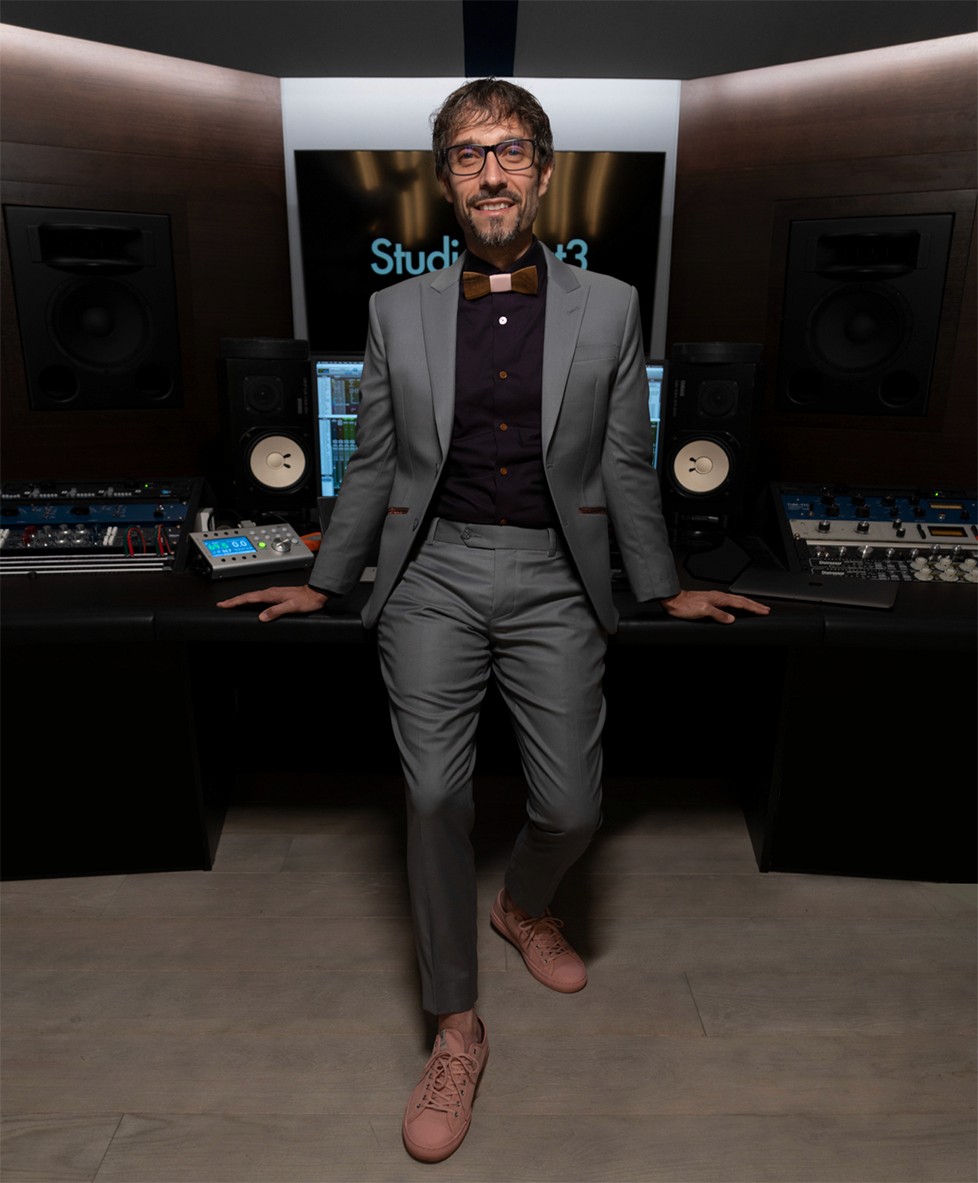
I opened my first studio, Studio Beat, in Italy, and it was in the basement of my dad’s house, so it was nothing fancy at all. I worked there for about five or six years, and during that time I worked on all kinds of different projects, mostly with Americans who were stationed at a nearby U.S. Air Force base in Italy. So I was already exposed to the American way of making music, the way they thought, and the way they interacted creatively with talent early on.
At the same time, I always had an ear to the street, if you will, and I was also working with Italian artists. My first two or three albums were all with Italian friends. Those albums didn’t really go anywhere, and they weren’t big hits on the charts or anything like that. They were very small projects, but it was really cool because I never let the two crowds I was hanging out with musically, the Americans and the Italians, stay too separate. I always put them together. There were so many features and collaborations, with one person doing a feature on one album and someone else doing a feature on another. I always liked to connect people and get them to make music together, because that’s really one of the superpowers of music. It brings people with different backgrounds together. Just look at this call right now.
You mentioned that you studied audio engineering. Was that back in Italy or in the States, and what was that experience like?
I was studying computer science at university in Venice, Italy. I remember taking the first few months of classes and thinking, “I can do it, but this is really, really boring.” Then one day I was walking through a nearby town and I saw a poster with the top right corner folded over, so half of the poster was covered. But at the bottom, I could see part of a console in a recording studio. Underneath it, it said, “Do you want to learn how to operate a recording studio?” I was like, “Well, hello. Absolutely, yes.” So I walked up to it, lifted it up, and started reading everything on the poster. It said to apply now and enroll in September, or whenever that was, and that’s how I ended up going to audio engineering school.
So I dropped out of college to do this small, somewhat bootleg audio engineering program. But it was amazing because even though nobody leaves audio engineering school really knowing how to record and mix albums professionally, you definitely learn the basics. My experience at the school was very positive because it pointed me in the right direction. Eventually, the relationships I built during that time helped me develop my career in the very early stages. At first, nothing was life changing, but eventually things grew into something that was. So yes, audio engineering school was definitely a very good experience for me.
What would you consider the first official project you got to work on?
I remember the first few projects I mentioned before in Italy. They were smaller projects. We had CDs and everything, but we weren’t really moving units or anything like that. Then this moment happened that I still remember clearly. If we were in Italy right now, I could take you to the exact spot. I was driving my car over a bridge, and back then, when you had a CD in the deck and ejected it to switch CDs, it would automatically switch over to the radio. When that happened, the radio came on, and the song I worked on was playing. I was like, “Hey, I mixed this. I recorded this.” It was mind blowing to randomly hear a track I worked on playing on the radio. That was one of the first moments where I felt like, “Wow, this is getting real.”
Then, a few years later, a similar thing happened, but this time it was on TV with a music video. The radio station I mentioned earlier wasn’t huge, but this TV network was nationwide. So for the first time, I saw a video for a song I worked on playing on TV across the entire country. That was mind blowing. Both of those moments happened in Italy. Then I moved to the States, and once I got to New York and started working with the real ones, everything multiplied by a hundred, maybe even more.
I remember one time leaving Bad Boy’s studio, getting into a cab, and hearing a song I had worked on in that same studio just a couple of days earlier. That was the power of Puff and his promotional network. The song was already on the radio, and I was hearing it right after engineering it. That was crazy. Then it just kept going. The first time I was credited on Jay-Z’s Kingdom Come album was incredible. That was literally life-changing. I could sit here and tell you all kinds of stories about things that happened that are still unbelievable to this day. Just the other day, I was at the airport in Florida, walking through it, and one of the songs I mixed came on. I was like, “Man, look at that. That’s a good mix.”
When a new client or artist comes to you, how do you approach a new project sonically from the beginning?
The first song I mix for a new client is always the most difficult because I need to understand what they like, what they don’t like, and how they communicate things. It has happened so many times that a talent, whether that’s a producer, songwriter, or artist, will tell me, “Hey, I want to do this, this, and that.” Then I do everything they asked for, they hear it, and they’re like, “Wait a minute.” So sometimes you have to understand whether they like the idea of what they’re saying, or if they really like what they’re saying. When it’s time for me to implement their vision, I need to truly understand that vision.
That’s why the first song is always the most difficult. When I’m ready to present the mix to a new client for the very first time, it’s like walking into a room naked. It’s like, “Okay, this is how I hear it. This is my vision for it. What’s up?” But the good thing is that I’ve done it so many times that I’m able to check my ego at the door and stay open to whatever they have to say about tweaking the mix and changing things. Oftentimes, my choices may be challenged by their vision if the two don’t line up.
Sometimes they hear what I heard and they’re like, “This is amazing. Let’s go with it.” Other times, they just trust me with their baby, and I can take care of it. Then there are times when I need to be guided by them to get to where they’re trying to go. There’s no right or wrong here. It’s really about whatever feels right and whatever feels best for the song.
Do you have any tricks you use, like listening to the references they send you or some of their previous projects?
Yes, absolutely. I always ask the producer what they grew up listening to and what music shaped their childhood, because that helps me understand their background. I don’t know if it’s a cheat code, but it definitely helps frame the whole process in the right way.
Then, of course, I listen to their previous work. In every Pro Tools mix session, I also keep the rough mix loaded at the bottom so I can compare it in real time and see where I am compared to where we started. That helps me make sure I’m staying true to the original vision while still improving things sonically.
Is there a moment when you know a song or a mix is finished?
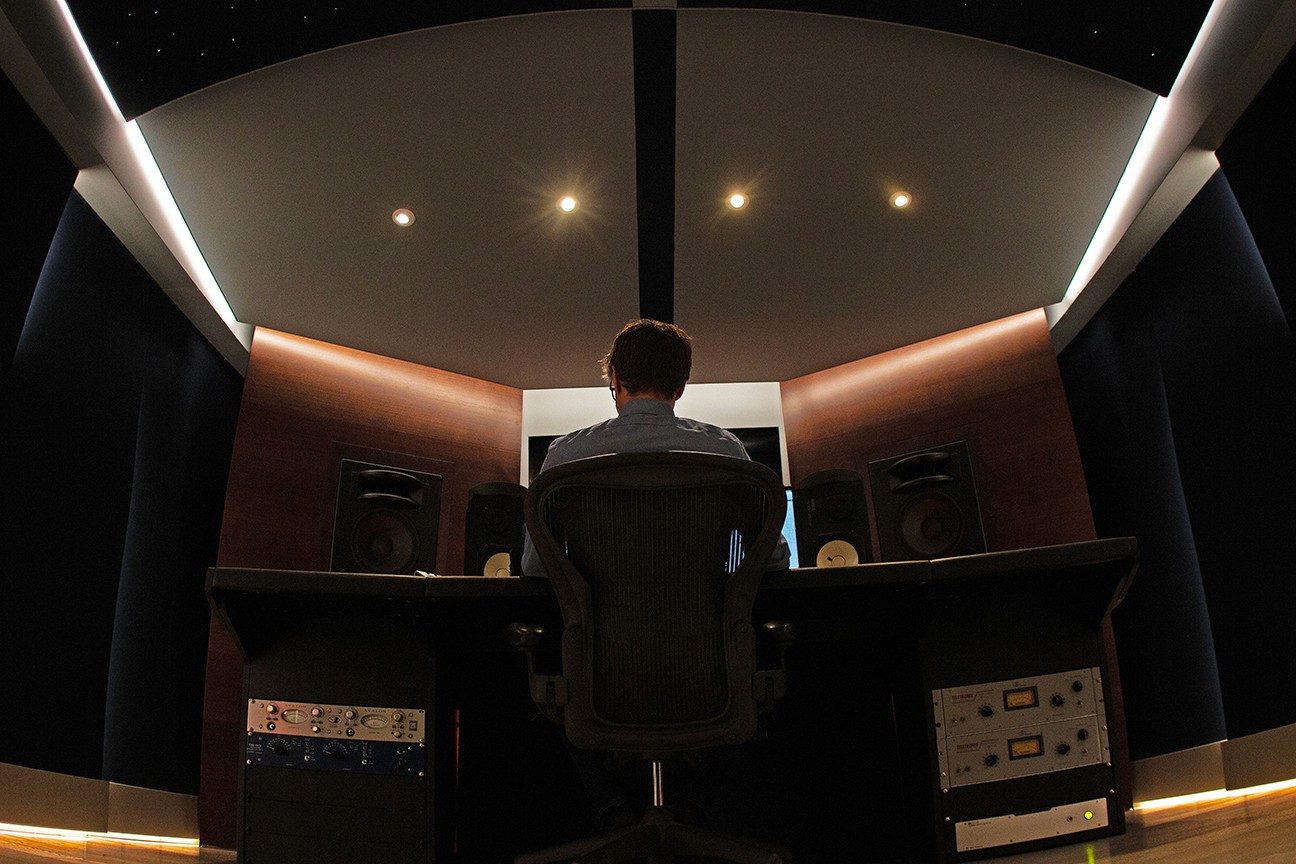
Yes, there is. I have a long list. It’s not a physical list, but in my mind I need to check all these boxes. I need to make sure I did my before and after tests, my earbuds test, and stress tested the mix to know how it’s going to sound in the worst scenarios and the most ideal scenarios. Back in the day, before I built this studio, I would do extensive car tests. Now I don’t need to do that anymore because I’m working in a perfect room where there are no secrets. What comes to my ears from the speakers is true, so I don’t need to wonder about it the same way.
So yes, there’s a long list of tests that range from readouts, empirical data, and numbers, which are important, but that’s not fully where it’s at for me. The biggest question is: Is this song coming through the way it’s intended? Do I get goosebumps? Can I not sit still when I’m listening to the song because I’m so excited that I want to move around? If I hear it in the car, do I want to turn it up to 11 because it rocks? So I have a bunch of empirical tests, and then I have the vibe test. When everything is checked off and there are no more problems to address or fix, it becomes clear. It’s like, okay, this is it. That’s when it ends.
However, when I’m making albums, which happens very often, these tests don’t end with the song itself. The next step is applying those tests and compatibility tests to the entire track list of the album. Once I’m happy with mix one, two, three, or four of each song, I need to go back and jump between songs one, two, three, and four to see if there’s continuity throughout the full album. I like to approach an album as an entire body of work. The transitions, volumes, and overall relationships between the music, bass, drums, and vocals should be respected throughout the entire body of work. There’s another layer when I’m doing albums, so it takes a long time, but then the final product is platinumized and pristine. It’s top-notch. There’s nothing better.

Do you have any creative routines before you start working on a mix? Do you listen to your favorite songs to get in the zone, or do you usually work around the same time every day?
I don’t have a playlist that I use before mixing. I don’t really do that, but I do start my day early in the morning and work kind of like a regular job, almost like a nine-to-five routine. What I’ve noticed is that it’s easier for me to dedicate my attention to the more analytical and number-based decisions in the morning. Then I take a lunch break, come back in the afternoon, and that’s usually when I’m more inclined to work on things like big energy, how the drop feels, and the more fun parts of the mix.
That being said, sprinkled throughout any working day in the studio, I’m constantly receiving tweaks and requests for changes on other songs I currently have open. At any given time, I might have 10 or 15 songs open for different clients. Someone might say, “Hey, can you turn down the snare on this song?” So I’ll take a break, go to that song, make the change, deliver the new mix, and then come back to the song I’m currently working on. That helps as a palete cleanser, if you will. Once you focus too much on the same piece of music, you can get too adjusted to it. You no longer hear things as they actually are because you get used to what you’re hearing. So I like to switch.
I don’t have a very specific routine, but for the most part, my mornings are dedicated to the numbers, and the afternoons are dedicated to the more fun things. Then everything in between is filled with revisions, meetings, sessions, and things like that.
When you’re mixing, are you usually working with plugins, or are you also using hardware? What are some of your favorites?
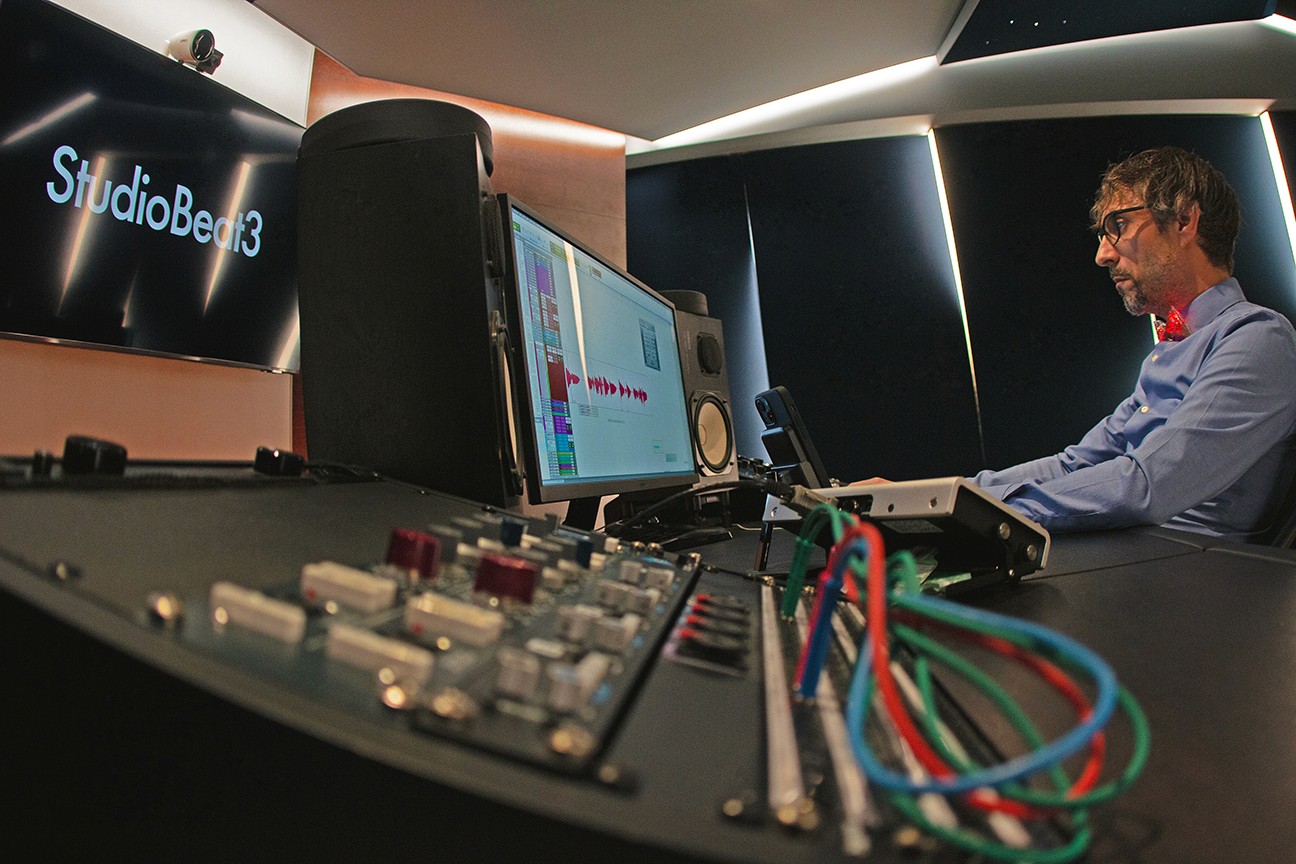
My philosophy is that once the audio hits the computer, whatever DAW you use doesn’t really matter. Once the audio is digitized and it’s in the computer, I don’t like to leave that realm to go out and do things externally. So although I have all the usual suspects in the studio, like compressors, EQs, preamps, and all of that, I actually don’t use any of the physical units for mixing. It’s all in-the-box. I open Pro Tools, and that’s where my mix exists from beginning to end.
That being said, all the units I mentioned are hardwired to the patchbay, so other engineers who use this studio can use them as hardware inserts. That’s completely fine, it’s just not my workflow. As far as the gear I like to use, the most important piece of gear for me is the studio itself. The acoustics we were able to build in that room are the number one thing. I guess it is a piece of hardware in the sense that it’s a real thing, but it’s not a compressor or anything like that. Those can easily be replaced.
So I’d say the studio and the acoustics come first. After that, it would be my speakers, my beloved NS-10s and Augspurgers. Those are the two speakers that have been in front of my face the longest, and those are real pieces of hardware. So for me, it’s the studio with the acoustics first, and the speakers second.
What mixing techniques are popular nowadays compared to when you first started? What has changed?
When I first started mixing, everything happened on the console. Anything you wanted to add dynamically, or anything you wanted to add for flavor, had to be sent out of the board to outboard gear. However many compressors you had in your racks, that was your toolbox, and that was it. That was the main difference. If you had two Distressors, you literally had two Distressors. That was it.
Nowadays, working digitally, you can have one plugin that does what a Distressor does, and you can use it as many times as you want on as many tracks as you want. So the limitation of having fewer units, and therefore needing to be a lot more committed to what you were working on, was definitely a good thing. I remember that fondly from back in the day. But today, you have infinite plugins. You can do whatever you want, which can also be a downside depending on the approach. There are no real limitations anymore.
When I made the switch from working analog to working digital, I recreated my analog workflow in the digital world with all the same limitations. Then, once I got comfortable working with only zeros and ones, I started including all the other advantages that digital gives you. Basically, now there are no real limitations in computing power, routing, automation, and all of that. Before, it was a lot more limiting.
What are some underrated mixing tips or techniques that more engineers should be using?
Speaking of what I was just talking about, I see so many sessions that come my way from recording studios that have a million plugins on them. Just because we can do something doesn’t mean we should. One thing I would say is that I really love the “less is more” approach, and I think it gets overlooked sometimes. It’s easy to think, “Well, we can add another plugin. We can add another one, and another one.” Sure, you can, but less is more. Do less and be more mindful about what you’re doing. When you’re mindful, you don’t need 3,700 plugins. You just need a few, and then you can go about your business.
What’s your opinion on the use of AI in music, both in production and in mixing and mastering?
I prefer to eat food that comes from a kitchen rather than a vending machine. I prefer the organic side of things. I’d much rather have something homemade than something made in a factory, and that applies to music too.
AI can be a very useful tool for musicians, producers, engineers, and anyone in the studio. That can be fantastic. But having a robot come up with creativity, I don’t know. I prefer creativity that’s organic and comes from the soul.
You’ve worked with a lot of different artists and legendary names over the years on some major projects. Is there one that stands out to you most?
There are so many projects. I’m very lucky to be able to work on amazing music every day. I’ve been very selective with the kind of sounds I’m known for, and that’s what I get called for, so I’m really aligned with the work that I do. That being said, whenever I change the EQ, tweak a bassline, change the sound of a hi-hat, or do anything else on a song, that decision is going to be heard by however many fans the artist has. So when you’re working with bigger artists, those small tweaks can be heard by millions of people. That’s part of the reward, if you will, because I know what I’m doing is important and will be heard and meaningful to the fans.
Of course, bigger projects offer a much bigger reach because the audience is larger. But as long as I like the music and I know I can make it better, I’m happy to be part of any of these projects. If I had to point to specific artists or projects that have been influential in my career, I would go in chronological order. Definitely Jay-Z. That was the first association I had with a major project. After the Jay-Z work I did in 2006, the next big thing I started working on was with Ye. That was another incredible name, and someone who’s so influential culturally and musically around the world. Of course, all the work I’ve done with Ye has been very important for my career, and I’m very proud of it.
But the list keeps going. There’s all the stuff I’ve done with so many other talents, from the Mac Miller work I did with 88-Keys, to the Black Thought album I did with Sean C, and so forth. The list is really long.
Do you have a highlight moment from the years you worked with Kanye West?
Yeah, absolutely. There was one time when I was working on one of his albums, and my phone speaker was broken. I couldn’t take calls normally, so I had to put everyone on speakerphone. You can imagine a person with that powerful voice and persona calling me, and I had to put him on speaker.
I remember it like it was yesterday. He screamed at me, “IRKO, I’m elated by these mixes.” He used the word “elated,” and I was like, “Wow.” That was such a moment for me. I took a mental snapshot of it, and it’s going to stay with me forever because it was incredible. To have a person of that magnitude put his stamp of approval on my work was amazing.
What advice would you give to the new generation of music producers and engineers who want to break into the industry and start working with established artists?
This is for the up-and-coming artists, producers, and engineers. At the beginning of your career, direction is a lot more important than speed. Of course, we all want to get where we’re trying to go as soon as possible, but there’s something to be said for the process of getting there. There’s a lot of heart in that part of the journey.
I remember those times in New York very fondly, if you will, when I was eating leftover fruit trays from sessions because I didn’t have money for an actual meal. But I knew I was on my way. That’s why I say direction is a lot more important than speed.
What plans do you have for the rest of this year, both personally and professionally?
My personal plans are, as always, to keep working on my cars and doing fun stuff with my resto mods. As far as my career and the studio, one of my goals is to bring more producers into the second studio we have right behind this wall. It’s a production studio, and my goal is to have more producers come in and work out of it because it has such an amazing vibe.
I like having creatives around. I’m doing all the audio nerd stuff in the big studio, and that’s great, but without the people making the music, I’ve got nothing to do. So I’d like to have more producers hanging out around the studio, and the same goes for recording engineers and mixing engineers too. I’m very fortunate to have this incredible facility, and I want to give back to the community that’s given me so much. My door is always open to those who are up and coming and serious about it.
What message would you give to the producer community out there?
I would say, if you haven’t discovered it yet, be very aware that music is communication, number one, and a team sport, number two. Nowadays, everybody can do everything by themselves, sure, but that’s not really where it’s at for me. I think approaching music as a collaborative effort usually leads to much better results.
So just think about music that way. Be collaborative, travel a lot, meet new people, and things are going to happen.
Follow IRKO on Instagram: @irkostudiobeat
More Blog Posts
See our latest blogs