Exclusive Interview
Produced by: Rudy Manager
Edited by: Rudy Manager & Andrej Aroch
Kat Lightning - Producer Behind Sexyy Red, Homixide Gang and Lil Yachty

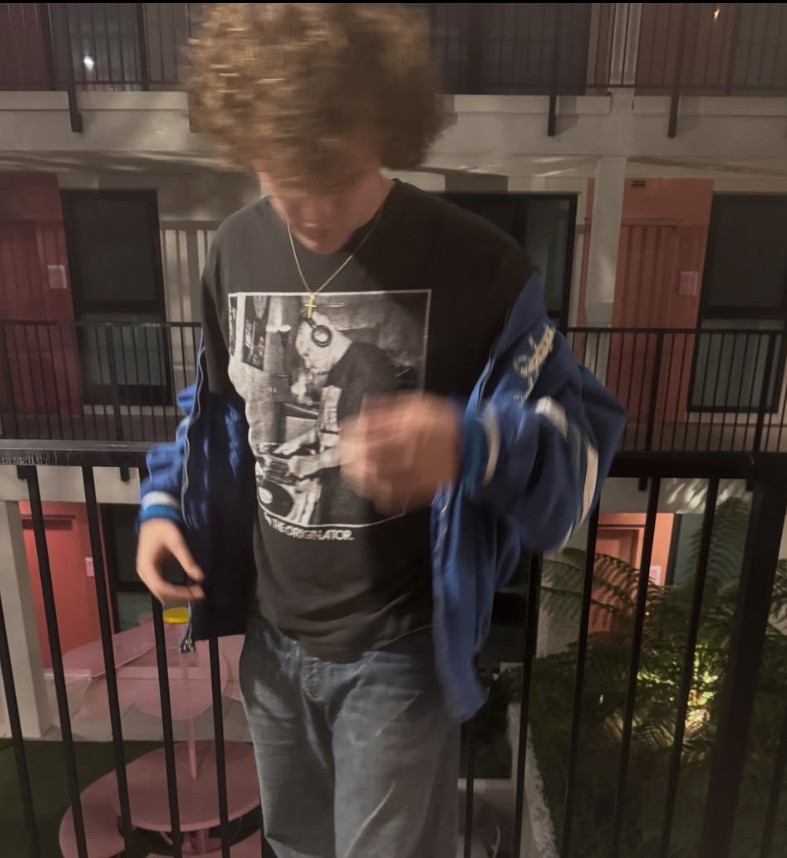
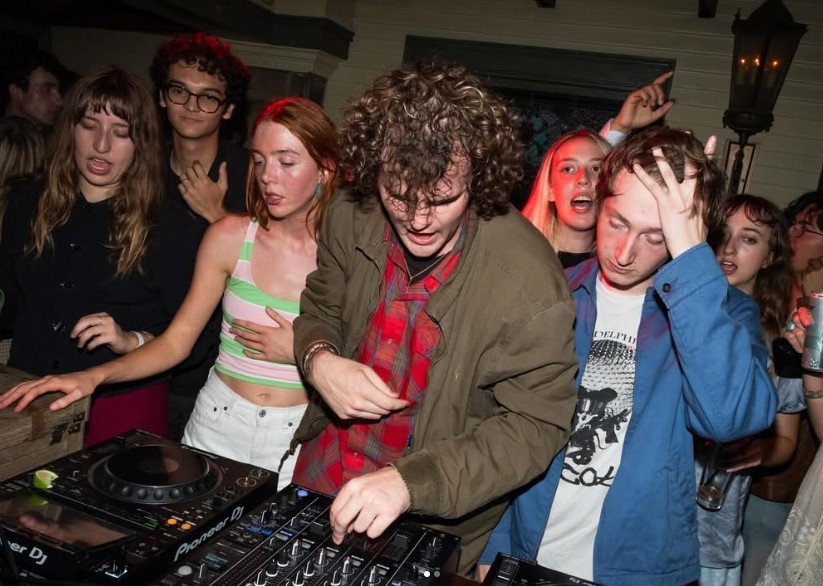
We linked with Kat Lightning on April 22 during our time in LA, meeting him on USC’s campus, where he’s currently studying. Before he headed to class, we sat down for a follow-up to our first interview from a few months ago. Despite his young age, Kat Lightning has already built an impressive resume as a producer, working across both mainstream and underground spaces. With credits alongside artists like Sexyy Red, Homixide Gang, Lil Yachty, and PlaqueBoyMax, along with his DJ gigs picking up, Kat is continuing to carve out his own lane while balancing school, sessions, shows, and artist development. In this conversation, we caught up with Kat about his current work process, the differences between creating in the underground and mainstream worlds, his advice for new producers, his thoughts on AI in music, and what he has planned for the months ahead.

“Talent definitely gets people far, but especially for new producers, the emphasis should really be on the social aspect of it.”
- Kat Lightning
It’s been over three months since we last spoke. What have you been up to lately, and how are you feeling?
I’m good. The ball’s been rolling naturally. It’s kind of been the same stuff, but on a higher level. I’ve been DJing a lot more, which has been fun. I just did a show in New York last week, and it’s finals season at school, so there’s a lot going on, but everything’s good.
All the development projects we were talking about three months ago are a lot further along now, so there have been some good improvements there. I’ve just been making music with my friends, enjoying the sunshine, and things like that.
What does your typical day look like right now with finals coming up soon?
In short, I wake up way too early, go to bed way too late, and nap way too much during the day because I’ve got classes five days a week. Some days are definitely more full than others because of that, but I also try to catch sessions during the week. Out of those five days, I’ll do at least three sessions. I rarely do less than three, even if it’s just cooking up with my homies.
I’m very diligent about my schoolwork and my studies, so a lot of my time ends up going toward homework, attending class, and everything like that. Then, usually immediately after class, I walk to my car and find a spot to work. It’s super busy, but it’s a good problem to have.
How do you usually work on music these days? Are you mostly cooking up at home or in the studio, and do you prefer building from scratch with the artist or playing them ideas you already made?
For me, if I’m doing an artist session, working from scratch with the artist is always my favorite thing to do. Even if you have one beat that you really want to play, most of the time they’ll hear it, and even if they don’t want to record to it that day, they’ll take it with them. That’s been my experience.
Working from scratch is great too, especially as I venture more into these pop and indie projects, because it’s all more instrumental. You’re writing the song, the structures vary, and it’s tricky to predict all of that. There are so many different chord progressions in one of those songs, along with all these details that are way harder to do from home compared to when you have an artist there writing lyrics to it.
Even for the hip-hop stuff, though, I definitely love cooking up from scratch. I love working with other people. I prefer working with other people, period. I have been working from home a little bit, but I do have an artist roommate, so we’ve been making a lot of music from the crib. I’d say working from scratch is the preference. I don’t mind pulling up and playing music either. It’s always a good hang.
What advice would you give to new producers who are walking into a session with an artist and being asked to cook up from scratch?
Number one, the thing I had to get over was realizing that you’re there for a reason. You had to earn or work your way into that room to some degree, so there’s no reason to think, “Oh, they’re not going to mess with it,” because if they didn’t mess with it, they wouldn’t have invited you. Also, just be chill. If you’re good to hang out with, even if you’re not the craziest producer ever, they’ll invite you back, they’ll like your beats, and they’ll record to them. You guys can build from there. It’s really a social game more than anything.
Talent definitely gets people far, but especially for new producers, the emphasis should really be on the social aspect of it. There are so many kids getting their 50,000 hours in on the internet, but they’re not really talking to anybody. It’s frustrating to not see results when you’re putting in so much work, but at the same time, if you put that much work into one side of it and don’t really get into the networking side, it’s not going to pay off. Being in the room is definitely a blessing, but even on the internet, just be chill. People respond to you for a reason. They reach out to you for a reason. Just keep those two things in mind. That’s really how you win the game.
You work a lot in the underground scene, but you also have placements with major label artists. How does your approach change between those two worlds?
There are definitely exceptions to what I’m about to say on both sides, but I find underground artists to be a lot more open to experimentation and more creative production overall. The underground is basically made up of a bunch of smaller niches and smaller circles, and they all have eyes on them. I’m not saying the mainstream doesn’t have other sounds in it, but the mainstream as we’ve known it for the past five years has pretty much been one or a couple of big bubbles without a ton of variation. If you get that formula down, great, because you can have a blast once you understand the formulas for those bigger circles.
But in the underground, if you want to try anything that’s more left musically or sonically, there’s definitely more leeway for producers to do that, and I really appreciate that about it. That’s why I fell in love with it in the first place. I also love the development side in general. If you try something super wacky and someone likes it, that can become their sound. You just never know. It’s a good position to be in because if they find something they really like in that sound, it can become part of their trajectory. They’re not all the way up there yet.
Even with the guys who are at the top of the underground right now, like Che, OsamaSon, and Nettspend, you see them having these paths that are evolving upward. I feel like a lot of the mainstream projects I’ve heard are pretty similar to the projects before them, whatever the reason may be. But I think a lot of it does come down to production.
Where do you find inspiration for your productions? Do you have a creative routine, like listening to favorite music to get in the zone, or working at a certain time of day?
For me, that certain time of day is always late, but I think that’s also because of my schedule with university. I really get inspired when I don’t make music, and I also get inspired when I’m on a run of making a lot of music. When I’m somewhere in between, I just want to keep my reps up every day. I want to make a couple of things a day, even if they’re not great. I just want to put something down.
It’s a super generic answer, but going outside, talking to my friends, and talking to my family definitely helps. My family helps me out with that, which is a blessing. I also like putting on good, familiar records. I like putting on things that confuse me as a producer because I don’t know how to replicate them. I put on a lot of J Dilla, old DJ Premier beats, old Madlib beats, and stuff that has a really interesting rhythmic palette. Then I’ll put on some ambient stuff that has a really cool chord palette. Just things I don’t think I would really make too much myself, but that I can pull a lot from.
I haven’t really tapped into that influence too much creatively yet because I’ve listened to Dilla my whole life, but I’ve never really sat down and tried to crack his code. I just hear what I hear in the rhythm of it, and then I can interpret it in my own way. That’s the art of it. But it really comes from everywhere. It comes from people and everything around me.
When you’re producing, what tools are you using these days? Are you mostly sticking with VSTs you already know, or experimenting with new tools to find different sounds?
I’m really into sound design. It’s something I didn’t tap back into for a while. I had a little hiatus with it, and I’ve been really enjoying it lately. Honestly, I’ve really been enjoying making sounds from scratch. I think it’s helpful to be able to do that because it deepens your understanding of why things sound the way they do. Critical listening is super important, and there’s no better way to develop critical listening than knowing how something became that way. That’s the whole point.
I do a lot of sound design. I don’t have a crazy plugin stash. I’m working with some good tools, but there’s not a ton in my toolbox right now, so I try to get as much out of those as I can. A lot of that happens within sound design. One thing I’ve been doing lately, which is super random, is using VSTs that have tons of presets. Omnisphere has tens of thousands of presets, so I’ll pick a word, type it into the search bar, and see which preset sounds the most like the word I’m thinking of. Then I’ll build around that sound.
I think conceptual beats are pretty cool. I have beats that are built around Fortnite sound effects, or beats that are built around aquatic life, fish, water, and stuff like that. That definitely helps, especially because somebody already had the idea to make a sound that matched that word and name it that. By looking deeper into those sounds, I learn how to make them sound like that word myself.
The short answer is definitely sound design as of late. You can make anything in Serum, and Vital is free. Vital is a lot like Serum. It’s not all the way there, of course, but it’s a free wavetable synth, and you can do a lot with it. The sky is really the limit with those kinds of things. There are just so many knobs, so you’ve got to learn what they do, and you’ve got to learn how to translate what you hear in your head into what you hear with your ears.
What’s your opinion on using AI in music production? Do you have any experience with it, and where do you see it evolving?
I think at this point, it’s just going to keep moving forward. I understand the whole idea of, “If you can’t beat them, join them.” The successful musicians, producers, and artists, or the most successful ones using this tool, are going to be the ones who can embrace both fully original ideas and AI as a tool.
I don’t use it personally, and I’m not a huge fan. But there are definitely a lot of people who are learning to balance that tool and use both sides. The only AI I really use is stem splitting, and that’s definitely a tool by design because you can’t really have it generate a new idea for you.
It gets tricky with certain things like Suno because some people will call a melody a tool, and some people will call a melody a composition. I’m definitely on the side that melodies are compositions, and I’m into composing my own. But again, if you can’t beat them, join them. I do agree with that in the long run, and I think it’ll get to a point where you can’t really beat it. I don’t think you can beat it right now, even outside of music, just from how it looks in the rest of the world. It’s a driving force on all fronts. I think that’s undeniable. I’m not a huge user and I’m not a big fan, but to each their own.

Besides finals, what do you have coming up in the next few weeks or over the summer?
I’ve got a lot of shows lined up in May around the country, which should be fun. I’ve never really gotten the opportunity to travel for shows too much. I just did my first one last weekend. Me and my buddy GoVanni! played in Syracuse, so now we’re doing New York City, Toronto, Orlando, and maybe Atlanta. That’ll be fun.
Maybe I’ll get some A&R work in too, and definitely focus more on production. I’m going to have a lot more time on my hands. Especially out here, the writing rooms and the pop and indie sessions tend to run more on a nine to five, morning and afternoon schedule, while the rap sessions are pretty much always at night or super late. I think I’ll be hyper productive with that because the two don’t really overlap a ton, so I’ll be able to do both if I want to.
Specifically, next I want to start working on a project. The first project I do will be more like a producer tape kind of thing, but it’ll be very linear and conceptual. It’s not just going to be a bunch of songs that are fire that I want to put together. I want to make the beats in sequence and think, “This is who would be on this,” because I feel like I have the privilege now of having such an arsenal of talented artists around me. I have people who could fill almost any kind of stylistic role, so I definitely want to do that.
Then I just want to keep building with these artists I’ve been developing with. I’ve been working with this duo, Babe Dylan, a lot, and we’re making some crazy stuff. I’ve been working with my boy, my brother GoVanni!, and we’re making some crazy stuff as well. There are a lot of people I think are definitely on the rise, and I think they have a big couple of years and a real career ahead of them. I’m super excited about that. Summer is a good time to do it too, especially because everybody’s in the mood. Everybody wants to go to a show, everybody wants to create, and it’s nice out now. I’m just trying to embrace the summer energy with that and make the most of it productively.
Follow Kat Lightning on Instagram: @katlightning
More Blog Posts
See our latest blogs