Exclusive Interview
Produced by: Rudy Manager
Edited by: Rudy Manager & Andrej Aroch
AusGod - New York Producer Behind Records for Future, Hotboii, GloRilla and Rylo Rodriguez

The Studio Talks team met up with AusGod at Pulse Music Studios in LA on April 19 for a conversation about his journey in music. AusGod is a New York producer who has worked on records for artists like Hotboii, Future, GloRilla, Rylo Rodriguez, and many more. In this interview, we talk about how he first got into music production, his early major placements, his creative process, his advice for new producers, and the lessons he’s learned along the way.

“Your brand is arguably just as important as the beats, maybe even more important.”
- AusGod
Can you share the story of how you first got into music and eventually started producing?
My name is AusGod. I’m from Queens, New York. I was always a musically inclined person. I played multiple instruments growing up, but I never actually made music. I was kind of just a kid playing guitar who really liked music. I stepped away from it once I started playing sports because I’ve been a basketball player my entire life, from high school to college and overseas.
The idea of making music was probably planted in my head around 2016, during that golden era of SoundCloud. That whole boom with MadeinTYO, Playboi Carti, Lil Yachty, Lil Uzi Vert, XXXTentacion, and that whole wave of rappers really pulled me in. I was probably a freshman in college, going to those parties and experiencing that whole culture. It was new to me, especially the whole underground scene, and I just fell in love with it. Then about a year and a half later, I was like, “Let me try making a beat.”
It wasn’t until 2018, when I got hurt during my junior season, that I picked up my laptop and decided to try making beats. I literally had a cast on my ankle and was sidelined during practice, so I was like, “Let me just download FL Studio.” I downloaded the free trial, and I was selling beats that same week for around $50 each. The rest is history.
When you were first starting out, how did you work on improving your sound? Did you have mentors, or were you mostly learning on your own through YouTube?
In the beginning, I didn’t really have many people to mentor me, shadow, or ask questions to, like, “How do you do this?” or “What’s MIDI?” So I really leaned on YouTube tutorials early on.
But once I started to get my feet under me, I found like-minded people who were also making beats. Being around a bunch of other producers who were at a similar skill level helped me grow in a way. Some of them were engineers too, so I really soaked up a lot quickly. After a while, I started to stand out within that group.
Who were some of the first artists and producers you started to work with?
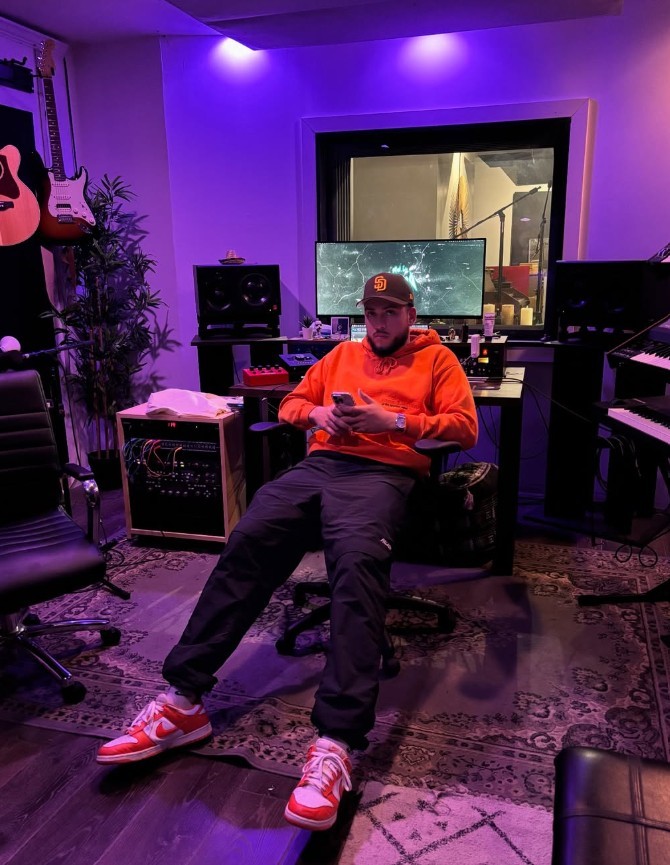
Like most people, I started off working with a bunch of local acts from New York. It was my friends and other people who were kind of buzzing at the time. Then I decided to start reaching out more and uploading beats to BeatStars. From there, people from all over the country started using my beats. I’d make a connection with a rapper from Atlanta, a rapper from Memphis, a rapper from LA, someone from Florida, and it started expanding from there.
Then I started reaching out to other producers, especially the bigger ones. I would literally follow people like Southside, ATL Jacob, and TM88, and I had notifications on for all their tweets just to see what they were doing. I remember ATL Jacob tweeted one day that he was doing collabs, and I was like, “F**k it, I’m just going to start sending him stuff.” I didn’t hear from him for about a month, and then randomly, when Hotboii first dropped his tape, Jacob hit me on Instagram and was like, “Yo, you’re so hard. Why did you stop sending me stuff?” I thought he didn’t like my beats, so I was like, “Oh, wow.” After that, I just kept sending him stuff.
Eventually, we got a song together with Dess Dior, and that was probably my first song with a bigger artist. Then about a month later, I was in the gym playing basketball, and when I checked my phone, I had about seven missed calls from Jacob. He was like, “Yo, I got one with Future.” I was like, “What?” Then I checked my phone and saw Hotboii had posted a snippet of the song, and it was going crazy. A few months after that, I had my first major placement.
What does your creative process look like when you’re making music? Do you listen to anything beforehand to get inspired, or do you treat it more like a 9 to 5?
I hate treating it like a 9 to 5. For me, I have to get myself into a flow state before I make music. If that requires me to listen to somebody else’s music to have a reference point, or to start with something really simple and build off of it, then that’s what I’ll do.
I reference a lot, I’ll say that. I take a lot of inspiration from other songs, other artists, and even just from hearing a good loop or sample.
What’s your opinion on the use of AI in music production?
I’ll say this. I got fooled badly the other day. There was a song on TikTok that I literally had saved and was playing on repeat, and I was devastated when I found out it was AI because I really liked it. It honestly made me mad, so I’m definitely anti-AI in that sense.
I think AI can be incorporated into your workflow, but the whole AI artist thing feels like a slap in the face to real artists. Take somebody like Kehlani, for example, who can really sing. It’s not fair to her that there’s a robot that can do inhuman vocal runs that otherwise wouldn’t be possible. How can you compete with that when someone has really worked hard to learn how to sing, control their voice, and control their breathing?
I do think certain tools can be cool. I think Suno has a feature where you can put a song into it and use it for postproduction or ideas, like asking it to add strings. Something like that could be useful. If I did that, I’d use it as a reference and then have an actual string player come in. But relying on it as a crutch is horrible for music.
Do you mostly work from your home studio, or do you prefer being in sessions with artists?
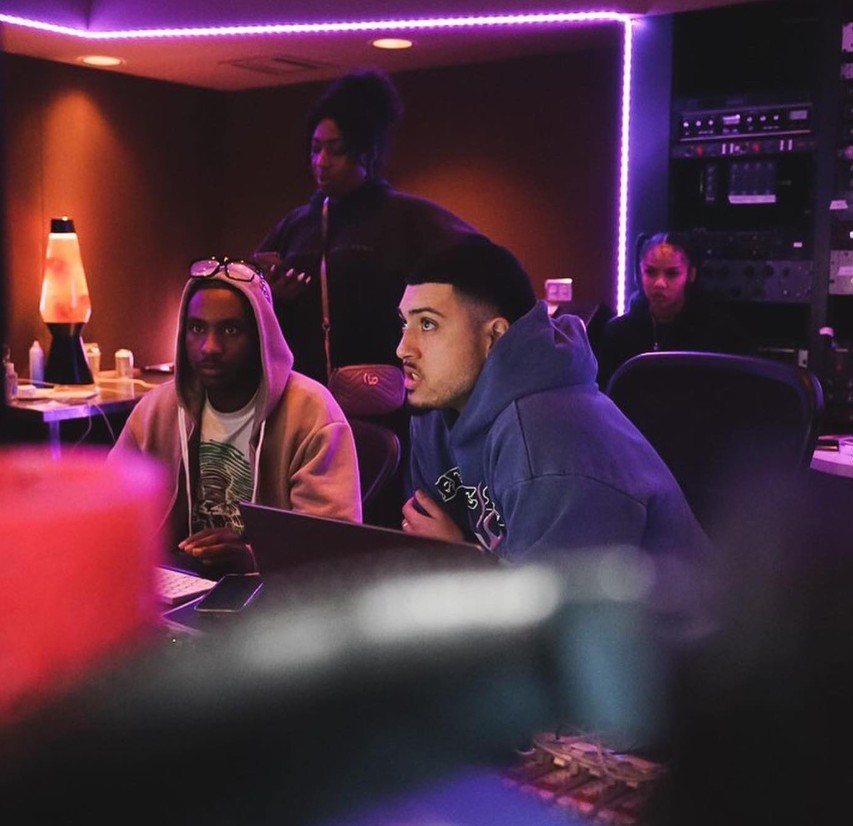
I’m definitely an in-person type of dude. I can make a beat from anywhere, though. I hate being in the same place all the time. I’ll pull out my laptop in a coffee shop and make a beat. I’ll make a beat on vacation, just playing it through the laptop speakers on a balcony.
Honestly, my hardest beats come when I’m just making them through my laptop speakers, if I’m being real. But yeah, I’m definitely the type of person who likes being hands on. I hate making stuff at the crib and then just sending it out. I do it from time to time, but I like to get a feel for the room and the context.
What’s your favorite project or placement that you’ve had the chance to work on?
I have an artist right now that I’m building. He’s breaking right now, he’s from New York, and his name is Ryan Witherspoon. We work really closely. We just put out a project with ten songs, and I produced every song from top to bottom. There were no other producers. I co-wrote it, engineered it, recorded it, mixed it, and mastered it.
That was my first time really having that much responsibility for a project, so seeing it come out great and be received well meant a lot. The artist is elevating too. He’s set to perform at Summer Jam this year for Hot 97. We have three songs in rotation on Hot 97, Power 105, and New York radio. It’s cool having that much of a say in his career, and I think that’s the most meaningful thing I’ve worked on so far.
Aside from that, my favorite placement is probably my first one because that first taste of it is always special. I’d probably say “Nobody Special” with Hotboii and Future. It still gets played, and I feel like that was my coming out party. That’s definitely my favorite.
What’s your advice to new music producers who want to start working with major artists?
I would say your brand is arguably just as important as the beats, maybe even more important. I feel like right now, everyone has fire beats because there are so many tools readily accessible to producers. It takes a lot less to become a producer now, so to stand out, you have to really focus on being visible, building your own brand, and finding artists you can help turn up.
If people can see that you can break an artist, there’s a lot more value in that than just sending out 100 beats or loops and treating it like a lottery where you’re hoping to get lucky. I’d say there’s more value in breaking an artist, being visible, building a brand, and becoming the guy people look at and say, “We have to go to him for that sound.”
You’re from New York. What do you think about the music scene there, especially the hip-hop scene, and where do you see it evolving over the next few months?
I think over the past five or six years, we’ve obviously had a huge wave. I think Cash Cobain kind of made it more palatable, less gangster, and more for the women. That was a really great moment for New York.
But now I feel like there needs to be a pivot. New York used to be the Mecca, the birthplace of hip-hop. I think it’s heading back toward that classic hip-hop sound. I don’t want to say boom bap because I feel like there’s a negative connotation with that, but I think the city kind of misses that sound. It feels like we’re moving past drill, and I see the city heading back toward that sound.
What are your plans for this year?
I set a goal for myself at the beginning of this year to be more visible. I know I said this before, but that would also be my advice to producers. I think that can really take you over the top. Having hard beats is great, and you can literally have a career without showing your face if you just have really hard loops or beats and reach a certain level. You could be perfectly fine with that.
But what I want out of this is to be visible, build a brand, and become a household name. I want people to know who I am. I don’t just want it to be an “if you know, you know” type of thing. That’s definitely a goal I set for myself this year, to be more visible and in people’s faces.
Follow AusGod on Instagram: @aus.god
More Blog Posts
See our latest blogs