Exclusive Interview
Produced by: Rudy Manager
Edited by: Rudy Manager & Andrej Aroch
Azul Pumar – Miami-Based Engineer & Creative Behind Don Toliver & Trippie Redd
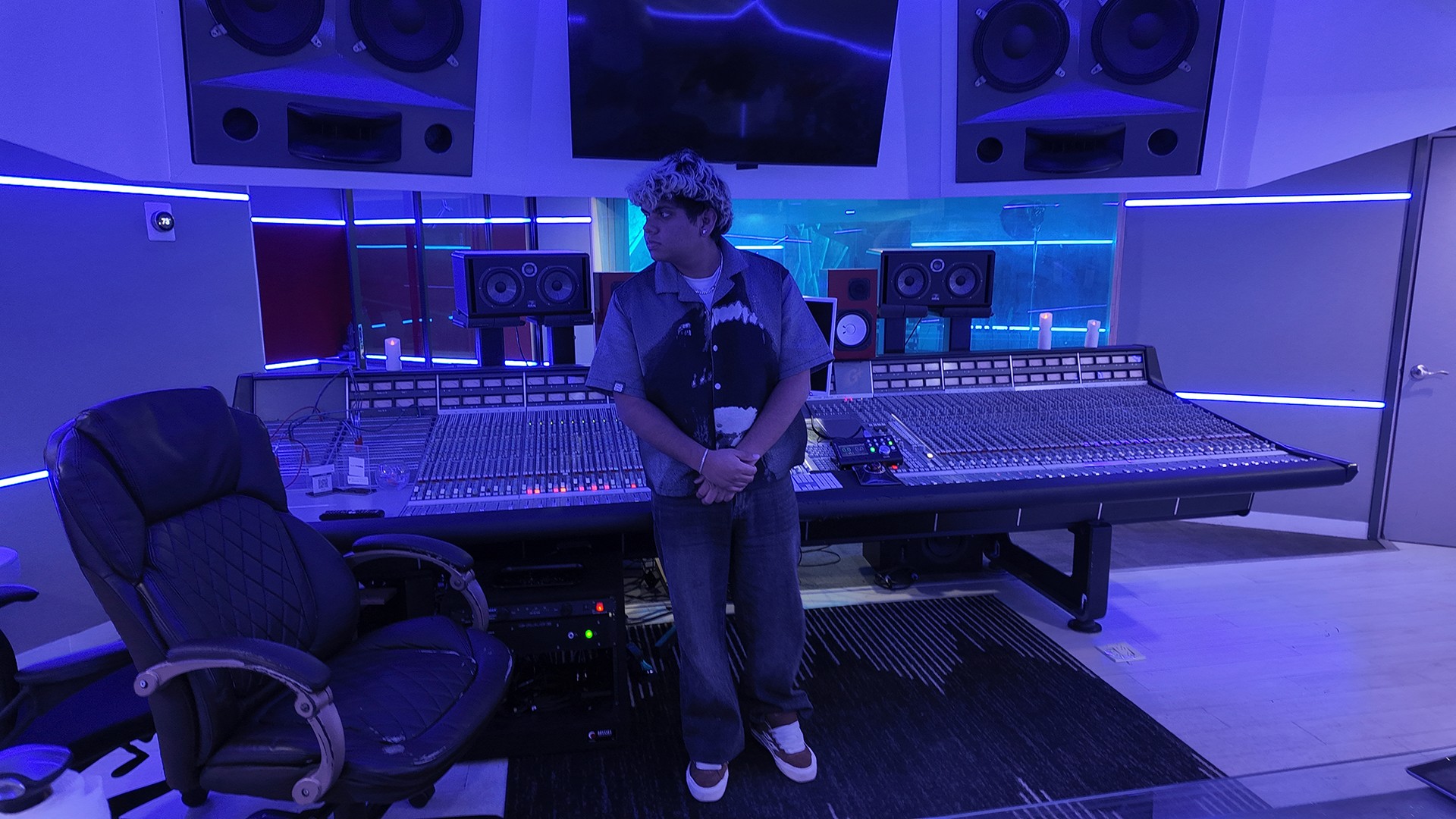
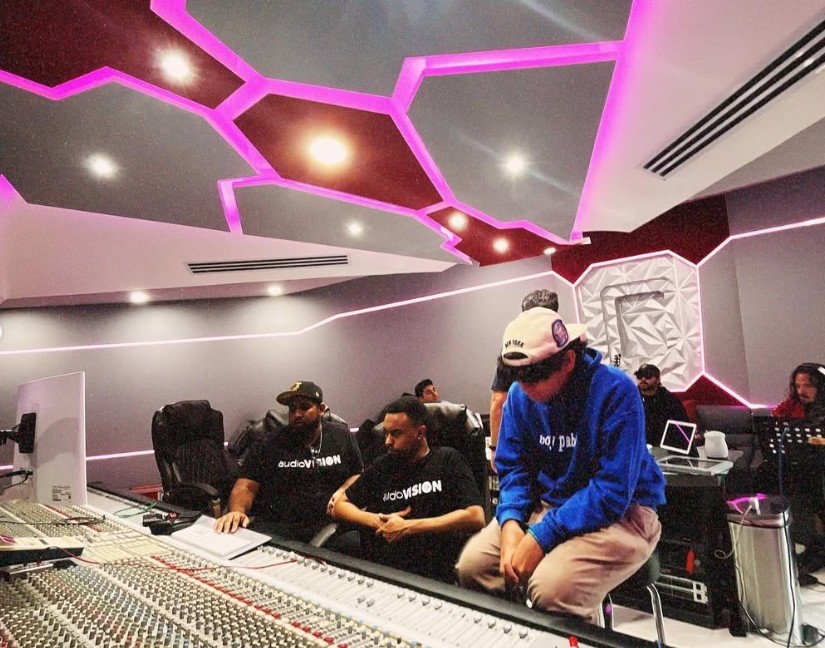
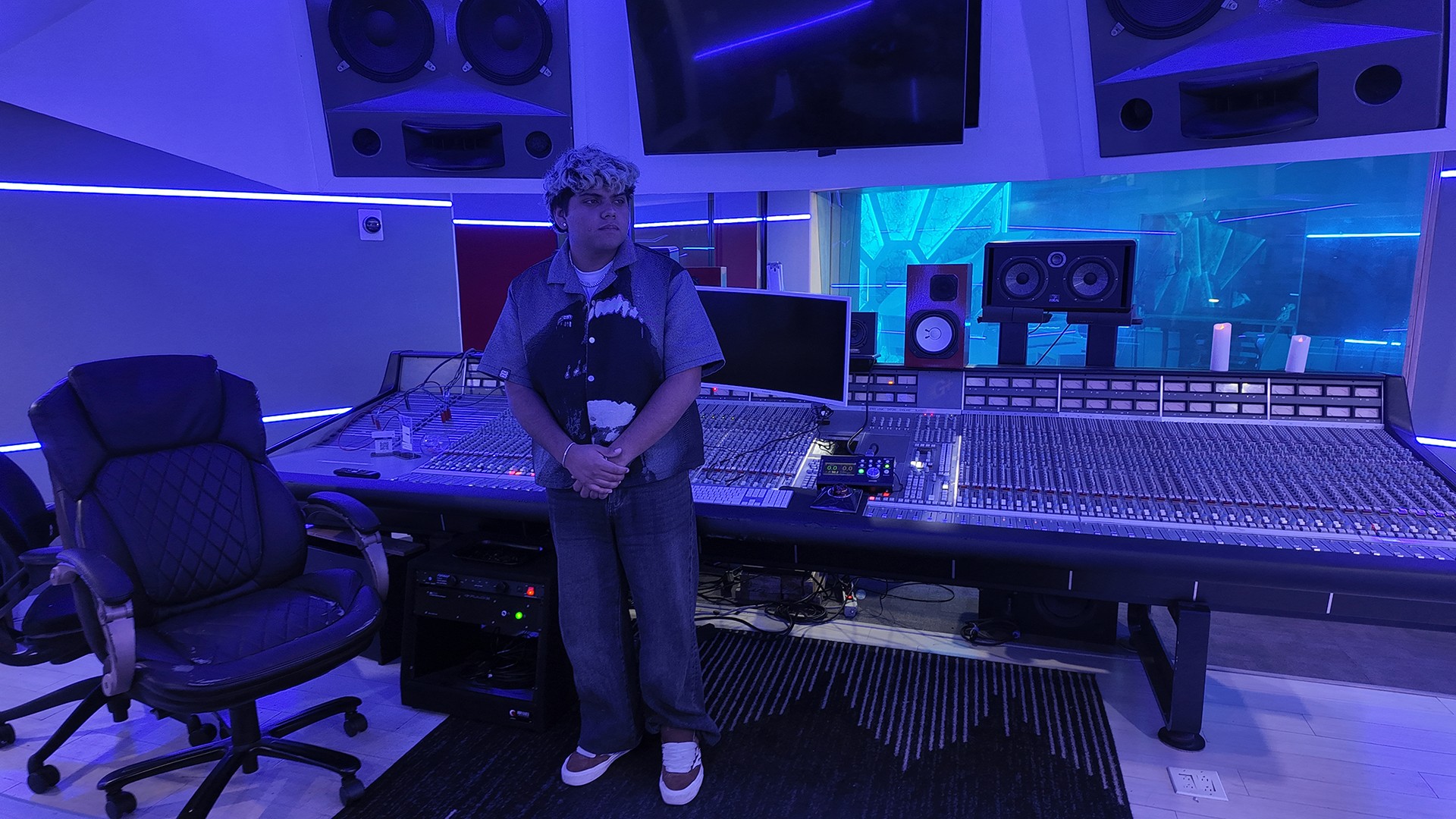
Studio Talks met with rising producer, engineer, and creative force Azul Pumar at Audio Vision Studios in Miami on April 12 for a conversation about building a career from the ground up and working around major names like Don Toliver, Beam, and Trippie Redd. Azul opened up about his early days experimenting with FL Studio, his time studying music at Full Sail, trending mixing techniques, his move into Miami’s fast evolving creative scene, and the lessons he’s learned from becoming a versatile collaborator in the studio. The conversation also touches on AI in music, advice for the next generation of creatives, and what’s next as he continues shaping his sound and career.

“A great recording engineer is someone with no ego. It’s someone who doesn’t come into the room flaunting their stuff or talking about who they’ve worked with before.”
- Azul Pumar
Can you share how you first got interested in music, and how that eventually led you to become an engineer and producer?
I’ve always been around music. My grandpa plays percussion, and I was always around him growing up. My parents love music too, especially the Latin music scene and artists like Shakira and Luis Miguel. I love Luis Miguel. So when I was growing up, I was surrounded by all of that.
Over time, I started developing my own taste. I went through a little dubstep phase where I was really into Skrillex and Diplo, and I loved what they were doing. I remember thinking, “I want to be a DJ. I want to be in front of crowds.” I was about 12 years old at the time. Then I saw one of my friends using Ableton, and I was like, “Bro, what is that?” He told me, “This is Ableton. This is what you use to produce music.” So I thought, “Okay, I’m going to get that tomorrow.”
I got Ableton, but I was super confused at first. I had the demo version, and I was looking up YouTube videos trying to figure out how to use it. Then I saw a video of Murda Beatz and Metro Boomin using FL Studio, and it looked like a video game to me. I was like, “Yeah, I’m going to get FL Studio instead, because Ableton is kind of confusing to me right now.” So I got the demo version of FL Studio and started making a bunch of beats, even though you couldn’t save the songs. I did that for a little while, then eventually bought the Producer Edition.
Over time, I had friends who knew I made beats, and they wanted to try rapping for fun. So I’d have them come over, and that’s how I first learned to record in FL Studio. After doing that throughout high school, I realized I definitely wanted to make music my career. I loved producing, having people in the studio, and building connections with artists.
I started building those connections in Houston. I was about 16 years old, going to different small studios, recording people, and playing beats for people. At some point, I knew I wanted to do this at a higher level. So I found out about Full Sail, applied, and from there I learned Pro Tools and got good at it. And now I’m here.
What were you doing creatively between the time you started using FL Studio and the moment you began studying music?
During that period, I was recording in FL Studio. I knew it wasn’t really the way people did it in the industry, because I kept seeing Pro Tools being used, but I didn’t know anything about Pro Tools at the time.
Then I saw this video of Turbo where he was talking about being in engineering school, learning how to engineer in Pro Tools, and using that to get into the right studios. That gave him opportunities to play beats for artists and build a vibe with them over time. Now he’s one of the biggest trap producers of all time, especially from his era.
Seeing that video really inspired me. I was like, “Okay, I want to be in the studio with artists. I want to learn how to do this.” That’s why I chose to learn engineering.
What was your experience like studying music at university?
At first, I was deciding between Berklee and Full Sail. Then I saw Berklee’s tuition, and it was around $20,000 to go there. I was like, “Nah, that’s too much.” I applied and everything, but I got rejected because I was really young at the time.
Then I applied to Full Sail, and they accepted me. I got a scholarship at first, so I was able to pay less than the normal tuition. I moved all my things there, and honestly, it was a good experience. It was in a really nice area in Orlando, and there were a lot of creatives around. I still talk to a lot of friends from Full Sail today, but the most important thing for me was learning Pro Tools.
During my time at Full Sail, I would go to classes and learn certain methods for using Pro Tools. Then I’d apply those methods in the real world. I would DM artists and talk to them, just trying to build new connections with people. Around that time, I was also an intern at a studio in Orlando called Odyssey Studios. I was there for two and a half months, and they were just starting out. Their first day open was my first day as an intern.
They told me, “We have almost no clients. The owners have their own clients because they’re engineers, but we don’t have clients for you. You’re going to have to bring in your own clients, and you’re going to have to do 20 hours a week of engineering. If not, you’re out of the internship.” I was like, “Okay, wow.” So I really had to get out there and meet new artists.
I went to a bunch of open mic events, industry events, and I’d go around Full Sail talking to artists. I was very timid back then, but through that experience, I learned how to be brave enough to talk to new people and make new connections. I learned how to show people that I was good at Pro Tools and what I could do. That studio was really how I first got into the industry.
After finishing school, you moved to Miami. What was that transition like, and were you already working with artists there?
One of my closest friends from Full Sail lived in Miami, and he showed me all the spots. He showed me the nice clubs and places. He’s a DJ, so he introduced me to the house scene, and I really liked it. I was like, “Okay, I’m going to come out here and bring my sound to this.”
Before I moved, I prepared about a month ahead. I talked with some studios, emailed them, and called a bunch of places. By the time I got to Miami, I had about five or six interviews lined up. I went to the studios, did the interviews, and eventually interviewed with Audio Vision. They brought me in with open arms and showed me the ropes.
I already had experience recording in Orlando, even though most interns there didn’t really have that experience beforehand. Because of that, I was able to move into an engineer position pretty fast. But Audio Vision taught me how to use consoles, how to properly use preamps like Neve, and how to properly use microphones. That’s really where I learned a lot of those things.
At first, I was kind of nervous because I knew I wanted to move, but I didn’t know if I was going in the right direction. I was deciding between Atlanta and Miami. When I came here, I thought it was mostly going to be Latin music, like reggaeton and Afrobeat. But then I got to the studio and saw the English market too. I saw artists like Future and Offset coming into the studio, and I was like, “Wow, okay. Miami has a lot more to offer than just Latin music.” Since then, I’ve always loved Miami for having both sides.
What were you doing creatively between the time you started using FL Studio and the moment you began studying music?
During that period, I was recording in FL Studio. I knew it wasn’t really the way people did it in the industry, because I kept seeing Pro Tools being used, but I didn’t know anything about Pro Tools at the time.
Then I saw this video of Turbo where he was talking about being in engineering school, learning how to engineer in Pro Tools, and using that to get into the right studios. That gave him opportunities to play beats for artists and build a vibe with them over time. Now he’s one of the biggest trap producers of all time, especially from his era.
Seeing that video really inspired me. I was like, “Okay, I want to be in the studio with artists. I want to learn how to do this.” That’s why I chose to learn engineering.
What was your experience like studying music at university?
At first, I was deciding between Berklee and Full Sail. Then I saw Berklee’s tuition, and it was around $20,000 to go there. I was like, “Nah, that’s too much.” I applied and everything, but I got rejected because I was really young at the time.
Then I applied to Full Sail, and they accepted me. I got a scholarship at first, so I was able to pay less than the normal tuition. I moved all my things there, and honestly, it was a good experience. It was in a really nice area in Orlando, and there were a lot of creatives around. I still talk to a lot of friends from Full Sail today, but the most important thing for me was learning Pro Tools.
During my time at Full Sail, I would go to classes and learn certain methods for using Pro Tools. Then I’d apply those methods in the real world. I would DM artists and talk to them, just trying to build new connections with people. Around that time, I was also an intern at a studio in Orlando called Odyssey Studios. I was there for two and a half months, and they were just starting out. Their first day open was my first day as an intern.
They told me, “We have almost no clients. The owners have their own clients because they’re engineers, but we don’t have clients for you. You’re going to have to bring in your own clients, and you’re going to have to do 20 hours a week of engineering. If not, you’re out of the internship.” I was like, “Okay, wow.” So I really had to get out there and meet new artists.
I went to a bunch of open mic events, industry events, and I’d go around Full Sail talking to artists. I was very timid back then, but through that experience, I learned how to be brave enough to talk to new people and make new connections. I learned how to show people that I was good at Pro Tools and what I could do. That studio was really how I first got into the industry.
After finishing school, you moved to Miami. What was that transition like, and were you already working with artists there?
One of my closest friends from Full Sail lived in Miami, and he showed me all the spots. He showed me the nice clubs and places. He’s a DJ, so he introduced me to the house scene, and I really liked it. I was like, “Okay, I’m going to come out here and bring my sound to this.”
Before I moved, I prepared about a month ahead. I talked with some studios, emailed them, and called a bunch of places. By the time I got to Miami, I had about five or six interviews lined up. I went to the studios, did the interviews, and eventually interviewed with Audio Vision. They brought me in with open arms and showed me the ropes.
I already had experience recording in Orlando, even though most interns there didn’t really have that experience beforehand. Because of that, I was able to move into an engineer position pretty fast. But Audio Vision taught me how to use consoles, how to properly use preamps like Neve, and how to properly use microphones. That’s really where I learned a lot of those things.
At first, I was kind of nervous because I knew I wanted to move, but I didn’t know if I was going in the right direction. I was deciding between Atlanta and Miami. When I came here, I thought it was mostly going to be Latin music, like reggaeton and Afrobeat. But then I got to the studio and saw the English market too. I saw artists like Future and Offset coming into the studio, and I was like, “Wow, okay. Miami has a lot more to offer than just Latin music.” Since then, I’ve always loved Miami for having both sides.
How do you usually approach working with a new client from scratch? What do you like to do first when someone reaches out to work on a project?
The way I approach it comes from how I built my process early on. In the beginning, I had about three or four artists I worked with, and I started developing certain habits with them. I wanted to build a good way of working. Now, most of the new artists I work with come through word of mouth. That’s how I’ve been able to get my name out there. Producers and engineers will talk about me like, “Hey, this guy is really sick. He likes to work a certain way.”
So what I do is bring them into the studio at my house. It feels very personal because this is my house. The first session is really just about listening to music. I ask them, “What are you a fan of? What do you like to listen to? What are you making right now? How do you see yourself in the next five years? What’s your vibe right now?” The whole session is just about listening to music, hearing their music, understanding who they’re inspired by, sharing who I’m inspired by, and making a connection through that.
Then the session after that is when we start making music. I’ll ask, “Do you have ideas? Do you have a guitar riff written down? Do you have a vocal note? Do you have something in BandLab?” From there, I’ll go into FL Studio, listen to the reference a couple of times, and ask them what they like and don’t like about it. That helps me navigate the production, understand how they want it to feel, and add my own vibe to it.
Since I’m a producer who does everything, I handle it all. I’ll produce for them, bring in other producers if I need to, record them, mix them, master them, and make sure everything is ready to go. That’s how I’ve been able to get my name out there, through artists saying, “Azul does everything.” There’s no need to have a producer, an engineer, and a mixing engineer separately when you can get it all through me.
In your opinion, what are the qualities of a great recording engineer?
A great recording engineer is someone with no ego. It’s someone who doesn’t come into the room flaunting their stuff or talking about who they’ve worked with before. That’s one thing I’ve always hated in the industry: big egos. People come in with egos, and a lot of times that can ruin the session. It can bring the energy down or take it somewhere it isn’t supposed to go.
I always try to come in very levelheaded. When I first come in, I try to be quiet, meet the artist, and talk to them. It’s similar to how I do it at my house. I just try to get to know them better. Then I ask them, “How do your engineers work with you best? How have they done you wrong before? How have they done right by you? What does a good engineer mean to you?”
It’s different for every producer and artist. Everyone I’ve worked with, from Hitmaka to Beam to Trippie Redd, has a different way of doing it. Some artists like engineers who stay quiet, and some like engineers who are more involved in the production. So I always try to get that context from them first.
What are some of the newer approaches or techniques you’re seeing in mixing today compared to the past? Are there any current trends that stand out to you?
Lately, over the last five years, I’ve been seeing a big change. Before that, people were swearing by the LA-2A, the 1176, and certain microphones. Now there’s a huge market with different companies making all kinds of gear, like compressors, preamps, and microphones.
People are starting to get away from the LA-2A sound and certain things we’ve always sworn by, and it’s been great to see. For example, Jaycen Joshua dropped The God Particle, which is a great mastering plugin. I’ve seen some older engineers say, “No, that’s bad. You have to use a limiter. You have to do it a certain way.”
I’ve always been someone who doesn’t like to follow the rules every time. I love to break the rules, and that’s why I learned them first. That’s why I went to college: to learn the rules so that now I can break them and combine different things.
What’s your favorite studio gear, and what are some of your favorite VSTs?
My favorite studio gear has always been Neve. Even though I just said people are starting to get away from the normal preamps and gear, Neve has always worked for me. I love the way it sounds, and I love the grit and saturation it adds to recordings.
When it comes to VSTs, I love Serum because you can make almost any sound you want with it, from a realistic violin to a piano to some crazy synth bass. It feels like a whole different universe inside of Serum.
Another VST I’d mention is Omnisphere. It has a huge bank of sounds, and you can still tweak and edit them to make them your own.
What’s your opinion on the use of AI in music production?
When I first started seeing AI music come around, it sounded really fake. It was the same thing with AI videos at first. They just looked really strange, and I felt like it wasn’t all the way there yet. But I’ll say that in the last year, it’s really gotten there.
I was actually invited out to a Suno camp. They came to Miami, got their own Airbnb, and invited certain people, like producers and creatives. I was invited to be there with them, and they had a whole meeting with everyone. They showed us the program and the best way to use Suno. From there, I really saw what it could do, and it’s very interesting.
I’d always say not to use Suno as your final idea, but it’s great when you’re stuck or feel like you want to add something, like a violin, and you don’t have one or the VSTs don’t sound realistic. You can go into Suno for that kind of stuff, and it’s saved my life before with certain things. I’ve had artists ask for the craziest instruments that I don’t have, even realistic live drums. It’s hard to record real drums. You have to book a studio, get a drum set, and get a good player. It’s a whole process.
With Suno, it’s quick. You just put in a prompt like, “I want gritty, aggressive drums that are really fast paced,” and you keep generating until you find the one you want. I feel like it’s a new version of Splice, where you have a lot of options. But now with AI, you can really make it fit into your music exactly how you want it to.
What’s your personal favorite project that you’ve had the chance to work on, and what’s your favorite production you’ve worked on?
My favorite project I’ve worked on is probably the most recent one with Don Toliver. I had no idea I was even on that project until I heard it. I was listening to it on the way to the studio, and I was like, “Oh, Don just dropped. Let me hear it.” So I started going song by song, and I got to the one with Teezo Touchdown. I heard it and was like, “This is fire.”
Then later in the song, the part I had written came in, and I was like, “Oh, this is crazy.” I had to stop the car for a second and pull over because I was like, “Hold on, is this me?” I listened again, and I was like, “Yeah, this is definitely me.” I had heard the reference and everything, and it was word for word. So I talked to my management and the management of the person I worked with, and they were like, “Yeah, it came out. We had no idea either until the day it dropped.”
I had worked on that song with 206Derek. I was in the studio with 206Derek and Beam, and this was about a year ago. They were talking about how they were working out of a new studio in Houston and looking for references for songs, beats, and everything. So we spent all night working on music, references, hook ideas, and stuff like that. I’m very happy that Don heard it, liked it, recorded over it, and used it. That was a blessing. It showed me that I’m moving in the right direction.
As far as my favorite production, I have this artist named Chris Milan. He’s a very underground artist, and I produce his entire albums. We have this one Spanish song that I really love called “Sábanas Tibias.” It’s either that one or something by one of my artists named EA. He’s also an artist of mine from Atlanta, and he’s moving here with me into my new house. He’s someone I work on all the music for as well. He’s a producer and an artist, so the music we’ve been making has been really nice.
Since we’re in Miami, what’s your perspective on the city’s music scene right now, and how do you see it evolving over the next few months or years?
I feel like Miami is becoming a hub. It already was one before, with the Miami sound and everything, but now it’s becoming way more active. I’m seeing artists, producers, and creatives from L.A. move here because in California, you pay state income taxes, everything is very expensive, the rent is crazy, and it’s overcrowded.
Since the most recent wildfires, I’ve seen a lot of people move here, including some really big people. I work with some of them, and they’ve told me they love it here. They love Miami for its beaches, its people, and its environment. The streets are really nice, and it feels like a very safe area. It’s very different compared to California, and in Florida, we don’t have to pay state income tax.
What advice would you give to the next generation of recording engineers and mixers who want to start working with clients and eventually working with A-list artists?
The first thing I would tell any creative trying to get into the game is to be very careful about who you’re around. Be very careful about who you surround yourself with, because there are people in the industry who can be very toxic. Over my last three years in Miami, I’ve had a lot of ups and downs. There have been people who didn’t look out for me when times got tough, and there have been people who did. So just make sure the people around you are people you really want in your circle and people who can help build you up to become a better person.
The next thing I would say is to be prepared. When I first moved here, I wasn’t in any big studios or major sessions as a producer yet, so I made sure to use that time to improve my chops. I focused on getting way better and improving everything I could, from production to engineering. So when the time came for me to work with major label artists, I already knew what I was doing. I came in prepared, and I didn’t fall short in those moments because I was strong in every part of my recording process.
What are your personal and professional plans for the rest of this year?
In general, I just bought my new house about two months ago, so I’m moving everything in. I have a way bigger home studio now, and I’m getting way more artists into that studio. It’s better because I don’t have to pay a studio for session time. I can use that money to invest in better gear and things like that.
Like I said earlier, I have one of my artists, EA, coming here from Atlanta. He’s someone I believe could be the next new artist. He has really out of this world music, and I believe it’s what the world needs. Once he moves here soon, we’re going to work on a lot of music. He already has his album planned out, and we’re going to work on the marketing too. I’m going to be very involved with everything he’s doing, so I’m really excited for that.
Professionally, with my higher level clients, I just want to keep bringing in clients, keep networking, and keep building good connections with people. This game is very small. Of course, it’s big in some ways, but the people who are really at the top are all very close to each other, so word spreads fast. Even if one person really likes you, they’ll spread the word, and that’s how I’ve been able to build more connections. I’m just looking forward to that and seeing what else comes out. I’ve heard a lot of things behind the scenes that might come out, so I’m just praying to God that it all comes out nice.
Follow Azul Pumar on Instagram: @azulpumar
More Blog Posts
See our latest blogs