Exclusive Interview
Produced by: Rudy Manager
Edited by: Rudy Manager & Andrej Aroch
Fuse - 808 Mafia Producer Behind Records for Future, Young Thug and Gucci Mane

Studio Talks linked with Fuse in downtown Atlanta on April 9 to talk about his music career, from growing up in the Bronx to becoming a respected producer with a deep catalog and a lasting impact on rap music. In the conversation, he reflects on his early influences, learning from mentors, joining 808 Mafia, and how working with artists like Future, Young Thug, Gucci Mane, Curren$y, Big Sean, and Rick Ross helped shape his career. Fuse also shares his thoughts on AI in music production, the evolution of trap music, and his future plans.

"As long as there are producers still making fire trap beats, it’s going to live on. And as long as there are artists willing to perform on those beats, I don’t see it going anywhere."
- Fuse
Can you share the story of how you first got interested in music and how you eventually transitioned into becoming a music producer?
I first got into music through my parents and my older sister. I grew up listening to everything they listened to, so I was hearing a lot of classics like Michael Jackson, Whitney Houston, Sade, and music like that. I was already naturally drawn to good music.
As far as wanting to be a musician, I think it was one of those things that a lot of kids feel. I’m from the Bronx, and they say the Bronx is the home of hip-hop, where hip-hop started. Growing up there and watching the culture become this huge thing right where I was from made me want to be a part of it. I wanted to do music, I wanted to do graffiti, I wanted to dress fresh and wear clothes like the rappers. I wanted to be involved in everything that came with the music.
When it came to actually wanting to produce, there was a point in my life when I was focused on being an artist and was just rapping. I worked with a lot of producers, and I had a lot of friends who were producers, but I wanted to create something myself. I felt like making my own beats would probably be a good thing. I’ve always looked at it like it’s good to be a one-man army instead of needing all these different components. If I could rap, make my own beats, and engineer in a studio, I felt like it made sense to learn everything. I didn’t want to be a one-trick pony, so that’s really what it was.
When you first started producing, what was your process for improving? Did you have any mentors, or were you mostly self-taught through things like YouTube?
My process for getting better as a producer involved a lot of things. I had a lot of mentors. I had one friend named Zay, and he’s still my friend to this day. He’s a super dope artist, producer, and engineer. I pretty much followed in his footsteps and watched everything he did.
He was the one who gave me my first MPC, so that was a big moment for me. He also introduced me to Reason, which was the first DAW I used. I went from hardware to using a DAW, and from watching him work, I also learned how to use Pro Tools.
Getting better has always been a self-driven thing for me. I still have that drive to this day. People can say I’m good or great, but I’m always looking for room to improve. That’s always been me, just trying to be better than I was yesterday. When I started making beats, I had a lot of friends tell me, “Yo, your beats are actually fire. You should really pursue producing.” I’d be like, “Yeah,” but I wouldn’t be too impressed. I’d just think, “Nah, I could get better. I could get better.” I was motivated by everything I heard on the radio, everything around me, what I heard in other studios, and other great producers.

What kind of hardware and VSTs are you using these days when you cook up?
I still love hardware, believe it or not. If somebody brings an MPC around me, I always get excited. Shout out to Akai and my boy Andy over there. But I like where we’re at right now, with everything becoming easier.
What I mean by that is, I was sponsored by Splice, so I love Splice. I love Output too. Everything Output has is dope, especially with the new Co-Producer feature, which can detect what you’re making and then give you suggestions. I feel like we’re in the future now. Making beats doesn’t have to be so hard anymore. It doesn’t have to take too much thought, even though you still need the talent, the skill, and the ear to hear something that’ll fit well with your beat.
I really love where we’re at because everything is easy and accessible now. I wouldn’t say I’m into as many VSTs as I was before, back when I was using Nexus, Komplete, and things like that. Right now, I like keeping it simple, and I still love sampling. I’ll still sample records, and I don’t think I’ll ever stop doing that.
We also live in an era where there are loop makers who can cut your job in half and make things a little easier for you too. I’m not opposed to any of that. Whatever gets the job done and whatever makes a hit, I’m with it.
What’s your opinion on the use of AI in music production?
I’m not opposed to AI. I like AI. It’s really about how you use it. Use AI, but don’t let AI use you.
I feel like a lot of people get comfortable with artificial intelligence because it can eliminate any type of work on your end, to the point where you just let AI do everything. For me, it’s more about still doing the human work and allowing AI to enhance what you do. You can also take bits and pieces of what AI gives you and mesh them together.
Like I said, I’m all for the future. I can’t wait until the day we can just think of a beat and the beat is there. That’s the future. Always move forward. That’s how I look at it.
How did you first connect with 808 Mafia, and what did being part of the group mean for you and your career?
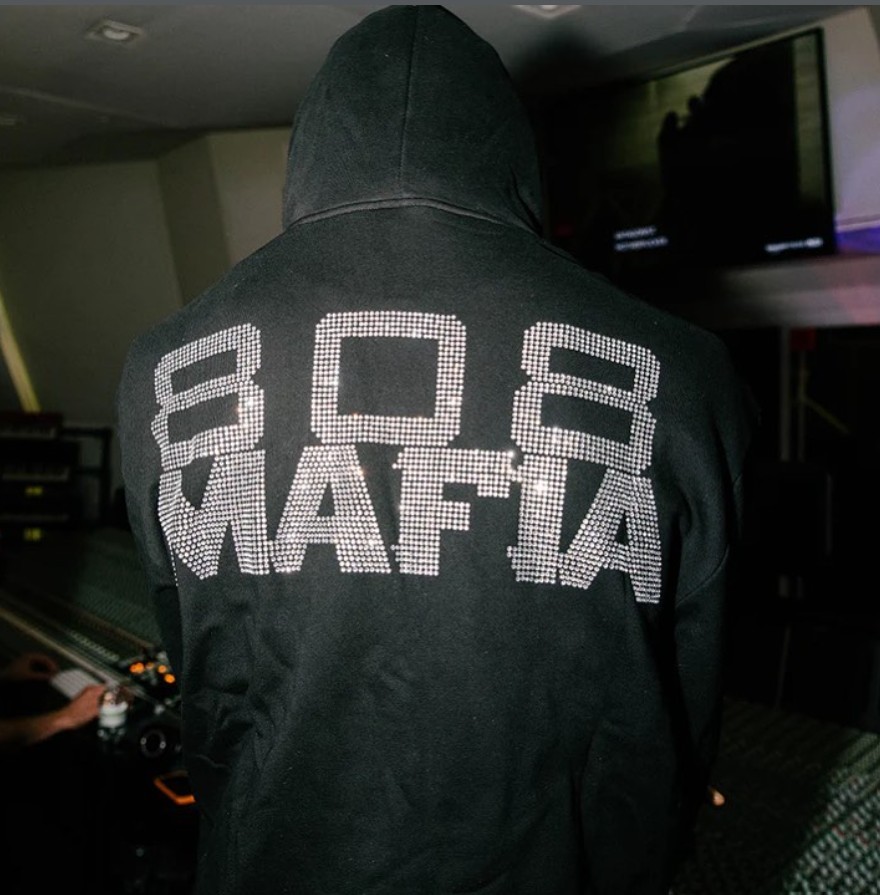
Shout out to the whole 808 Mafia, and shout out to my partner Southside. Being part of 808 Mafia changed my life.
The thing about it is, I never set out to be part of 808 Mafia. It wasn’t one of those situations where I was a producer trying to get signed by them. It just kind of happened that way. Southside and I had a mutual friend, and through that mutual friend, I was giving beats to Waka, Gucci Mane, Wooh Da Kid, and a lot of Brick Squad artists. Southside started liking the beats I was producing.
One day, we got on a call and he was like, “Yo, I want to sign you to 808 Mafia. I want you to move to Atlanta.” Where I’m from, a lot of people don’t make it out of the area. We all have dreams and aspirations to do things, but opportunities don’t come around that often, and I wasn’t going to turn down an opportunity that could potentially change my life.
You don’t know your life is going to change in that moment, but when you take that leap of faith, you never know what can happen. That’s pretty much what it was. Southside told me to move to Atlanta, I came to Atlanta, and the rest is history. I met a lot of cool people, a lot of dope producers, and a lot of dope artists in Atlanta. I was blessed enough to create a career out here, and I’m still doing it to this day.
You’ve worked on so many huge records throughout your career, but is there one that stands out to you for a particular reason?
It’s kind of crazy because most people would think some of my favorite records are my biggest records, but a lot of my favorite records are actually ones I produced with Curren$y. The reason I say that is because when I create and get placements with artists like Future, Young Thug, NBA YoungBoy, and the list goes on, I’m pretty much just throwing bait out there and seeing what they bite on. Whatever they end up using is what they use. That’s different from actually cultivating something with an artist.
When you’re in the studio with an artist and they’re like, “Yo, just do you. Make what you like, give it to me, and I’ll take it from there,” I like that. Working with Curren$y gives me a lot of creative control when it comes to picking the beats and helping with the track list. There are a lot of things that play a part in producing beyond just making the beat and giving it to the artist. He allows me to really be a producer, so there are a lot of songs I produced for Curren$y that I like more than some of the songs I’m more known for.
If I had to pick one song from my work with Curren$y, it would probably be “Pass Rich.” It was actually co-produced by my boy Cashmere Brown, so shout out to him. I like that song because of what Curren$y is talking about. He talks about dreaming big and how everything is achievable. He’s talking about his own life when he says things like, “My mom’s crib is next to mine.” Those are things you dream of, like having the cars, having everything you ever wanted, dreaming it first, and then achieving it. And he’s saying that you can achieve it too.
Then on the deluxe version of that song, we featured Rick Ross, and Rick Ross is one of my boys too. I love working with Rozay. I’ve worked with him often, but to get him on a project that I actually got to produce and put together was huge to me. So shout out to Rozay for that. “Pass Rich” is definitely one of those records.
Outside of “Pass Rich,” if I had to pick a more widely known song, I’d probably go with Big Sean’s “Moves.” I’d say “Moves” because that’s the song that actually changed my life financially too, so shout out to Big Sean.
What advice would you give to the new generation of music producers who are coming up and want to start working with established artists while building their careers?
Usually, when I meet new producers, artists, songwriters, or anybody like that, it always starts with motivation. I let them know that it starts with you wanting it. You have to see it in your head first, then you have to speak it into existence, and then things will materialize.
I also tell them that nothing happens overnight, so don’t expect overnight success. Some people are blessed with overnight success, but that’s not going to be the case for the majority. You have to be consistent, and beyond being consistent, you have to understand that since it doesn’t happen overnight, it’s going to take a lot of work and effort. If you’re willing to put in that work and that effort, you’ll definitely get results. Results may vary, and everybody’s journey will be different. It’s really about being prepared for when your time arrives.
As far as making it and being successful, I think it’s bigger than just having good material, like beats and things like that. It’s about relationships. In my opinion, it’s not about who’s the best in the music industry. There are people who make beats better than me who have no placements, and I don’t feel like having placements makes me better than anybody. There are also people with more placements than me who some people might say aren’t better than me. But to me, it’s not about who’s better. It’s about the relationships you have, how good of a person you are, and how easy it is for people to work with you.
Do you show up on time? Do you show up when people need you? Are you dependable? Honestly, those are some of the biggest factors. If someone is considering working with you, especially in an industry that’s oversaturated with talent, that means they had to filter through a lot of people just to get to you. So if they’re dealing with you, don’t take it for granted. It’s almost like a chance that may only come once in a lifetime.
If you make it in this industry, you’re definitely one of the chosen ones. So I tell people not to take it for granted, to work hard, and to have something they believe in. Whether it’s yourself, a higher power, your art, or your skill, just understand that’s what’s going to get you through. That’s pretty much all it really is. It doesn’t take too much beyond hard work.
What’s your opinion on the current state of hip-hop and trap music, and where do you see it going over the next few months or years?
As for trap music, I think it’s one of those things that has a life of its own. I don’t really see trap music going anywhere. If anything, I see it evolving, because you have to think about where it started compared to where it is now. It started as a Southern thing, and now it’s a global thing. I feel like it’s just going to keep getting bigger and bigger.
There are so many artists we haven’t heard yet who make trap music, and I think it’s really about who’s going to keep carrying the torch. There are current artists, there were the predecessors who came before us, and then there were the ones who carried the torch after them. Those are the ones who are relevant now, and now it’s about who’s going to carry the torch after them. That’s what it really comes down to.
But that’s the case with any genre, right? You look at pop music, and it’s like, okay, you had this person, but who’s doing it now? With trap music, it’s the same thing. You had certain people before, and now it’s about who’s doing it now and keeping it relevant. When hip-hop first started, I’m sure people thought hip-hop, and rap music in general, was just going to be a short-lived thing. Here today, gone tomorrow. But I can’t even tell you how many years hip-hop has been relevant. It’s been a long time, and I feel like it’s not going anywhere anytime soon.
I truly feel like trap music is a subgenre within rap, and it’s not going anywhere either. It just has to keep evolving. As long as there are producers still making fire trap beats, it’s going to live on. And as long as there are artists willing to perform on those beats, I don’t see it going anywhere.
What are your plans for the rest of this year, both personally and professionally?
My plans for the rest of the year are centered around a platform I have called FUSE University. I work on it through the Nero Network, where producers and artists can submit music and things like that. I also created a Discord for it, and there’s a lot of talent in there. I already had a record label that I started many years ago, a small company called Art Gallery Music Group. I call it more of a boutique thing because I’m not trying to sign a whole bunch of artists or producers. I’m just trying to sign the ones who stand out the most.
I think by using my platform with Nero, the FUSE University Discord, and the overall networking side of it, my partners and I can filter through everything and find the true talent that we feel fits the company. That’s one of the main things, just building the company up.
Outside of that, I also work with a company called Royalty House, where we help producers, songwriters, engineers, and A&Rs collect their master royalties. As you know, in the industry, a lot of people don’t even know how to collect their master royalties. We try to bridge that gap and help people collect money that’s just been sitting there. You’d be surprised how many artists, producers, engineers, A&Rs, and others don’t even know how much money they have sitting there. To see people actually get checks and be happy, and to see their life get that next wind, as I like to call it, is great. It’s great to help them with that. So shout out to Royalty House.
Outside of that, I’m still producing projects. As you know, Curren$y and I already have Spring Clean and Spring Clean 2, so currently we’re working on Spring Clean 3. This might be the last chapter of the whole Spring Clean theme, but I’m sure we’ll have more projects to come. I’m still working with everybody, like Future, Rozay, and the usual suspects you see in my catalog. We’re all pretty much family at this point. So the plan is really just to stay busy.
We wish you all the best with your projects, and we’re looking forward to hearing the new music.
Follow Fuse on Instagram: @fuse808mafia
More Blog Posts
See our latest blogs