Exclusive Interview
Produced by: Rudy Manager
Edited by: Rudy Manager & Andrej Aroch
Josh Schuback – Engineer & Mixer Behind Albums for A$AP Rocky and Kanye West

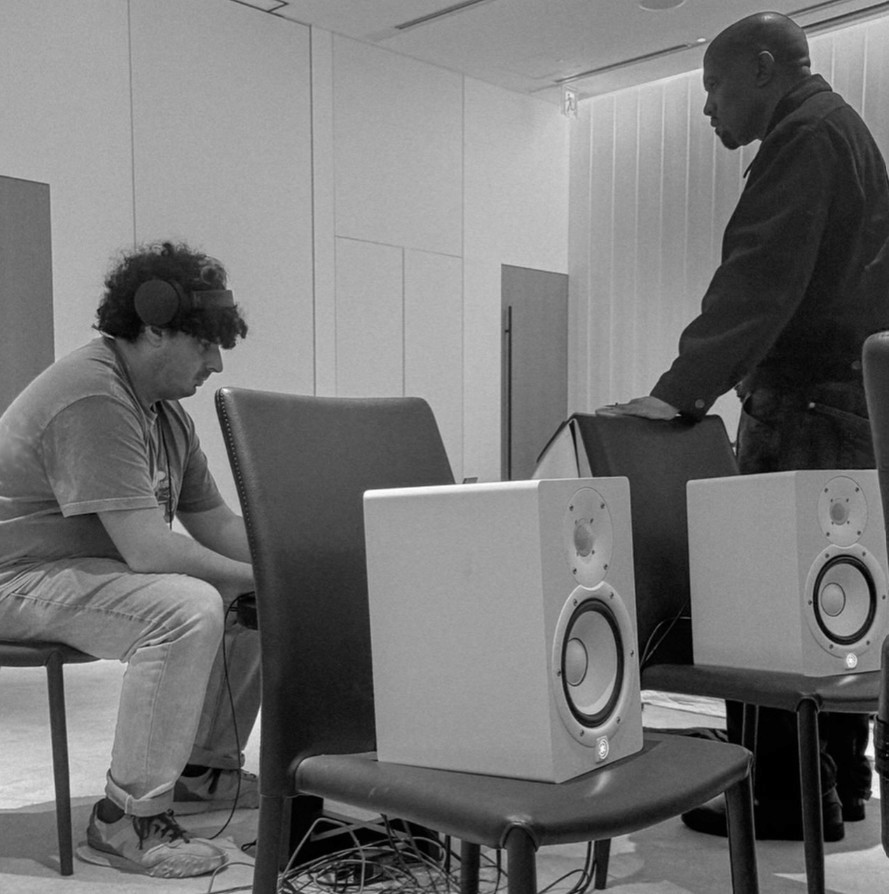
Studio Talks met with Josh Schuback at 1500 or Nothin’ Studios in Inglewood on April 15 to talk about his career, creative process, and evolution as an engineer, mixer, and producer. Josh started his career on the East Coast in Boston, working at Phoenix Down Recording under the guidance of John Scott before moving to Los Angeles. Since then, he has built an impressive résumé as an engineer and mixer, contributing to recent culture shaping projects including albums by A$AP Rocky and Kanye West. Today, Josh works closely with legendary producer Rance and the 1500 or Nothin’ team, while also stepping further into the world of music production. He is also part of the band The Modern Age, where he continues to create and release his own music. In this knowledge packed interview, we talked about his journey in music, his approach to creating and mixing records, his thoughts on AI in the studio, and the advice he would give to the next generation of music creatives.

“What I always stayed true to was giving the artist, the producer, and whoever I’m working with the best experience possible.”
- Josh Schuback
Can you share how you first got interested in music, and was there a specific moment when you decided to pursue it seriously?
I first got interested in music when I was around seven or eight years old. I don’t know exactly why, but my parents bought a piano for our house. I don’t really come from a musical family, but I grew up with a piano in the house. I took piano lessons for a little while when I was younger, and I always really enjoyed it.
My dad’s a big music fan, so I grew up listening to a lot of music and always felt a really special connection to it. It wasn’t until I was around 19 or 20 that things became clear for me. I started interning at a studio in Boston while I was in university there, and on the very first day, it became clear to me. I thought, “This is what I’m doing for the rest of my life.”
How did you get into the studio in the first place? Was it music related, or did you just go there to visit?
It was music related. I had a professor at university, and I took some music classes with him. I remember asking him one day after class, “Hey, if I want to learn more about this stuff, what do you recommend?” He told me to try interning at a recording studio.
So I started Googling recording studios near me, called a bunch of places, and spoke to a lot of difficult people along the way. Then I called Phoenix Down Recording, which was owned and operated by John Scott, and he seemed like a good guy. He told me to come in, so I went there the next day, and the rest was history.
As you mentioned, John Scott is also your mentor. Is there a specific piece of advice he’s given you over the years that has stuck with you the most?
How much time do you have? John has a lot of great sayings, and he still drops gems on me. I remember early on, there was one thing he told me that really stuck. I think a lot of younger engineers can be timid about making a move, even when they hear something, because they’re still unsure of themselves.
H He used golf as an analogy and said you need to know where the hole is. Sometimes, you have to hit it past the hole to understand how far away it is. I always think about that when I’m compressing something or making any kind of adjustment. Sometimes it’s okay, and even good, to overdo it and then dial it back, instead of just creeping something up half a dB at a time. Turn it up six, then turn it down two, or whatever the move is. That idea of making bold moves always stuck with me.
Another classic John quote is, “Engineers solve problems.” I always think about that too.
How do you usually approach creating music from scratch when you’re starting a new project?
It really depends on what my role is in the session. Am I engineering, producing, or doing both? In general, my mindset has always been to gravitate toward whatever feels interesting to the people in the room. It could be a vocal melody, a drum beat, or a key loop. Whatever we all connect with, that’s usually the place to start.
The big thing for me is moving quickly. I find that even if you like something, giving yourself too much silence to sit with it can make you start to second guess it. You start wondering, “Is this even good? Do I still like this?” Then doubt creeps in. So I try to keep sound playing constantly, even if we’re only working on an eight bar idea at that point. Keep it playing, keep it moving, and don’t let it stagnate.
How does that approach differ when you’re mixing? When you’re working on a project, do you usually start with the vocals first, or do you focus on the instruments first?
It really depends. I usually try to sit with the demo for a little bit and just understand the record and where I think it should go. Once the session is open, I’m following my instinct at first. If the kick needs attention, or the bass, or the vocal, I’m going to go toward that first.
I try to make most of my critical moves in the first 20 minutes. That could be volume leveling, changing sounds, or making any fundamental adjustments that I want to get done right away. Then I’ll usually get into the weeds with the vocals, whether that means tuning or more detailed vocal work.
A lot of the stuff I’ve been mixing recently has been more R&B focused, so there are a lot of backgrounds and harmonies. Leveling stacks and figuring out where the backgrounds are going to sit in relation to the lead vocal can make a profound difference. After that, I’ll get into the more technical edits and details.
Is there a moment when you know a mix is finished?
I would say the mix is done in two moments. One is when I think it’s done, and the other is when the artist says it’s done. Usually, those moments do align. For me, there is a definitive moment. The best way I can describe it is just a feeling. When I play back the record and nothing is catching my ear, but everything feels right, that’s when I know.
Even if there was a note from the artist about a vocal level or something like that, once I address it and everything is sitting where it’s supposed to, it feels like I’m just listening to the song as if it’s already out. How you get there is a little different every time, but yes, there is a definitive feeling when I listen to it and think, “Yeah, this mix is done.”
What’s your opinion on the use of AI in music production, mixing, and mastering?
I feel like the AI conversation is the elephant in the room in every studio these days. I use it a lot on the production side, and I find that most people are starting to. The way I always try to explain it to people is that, right now, it’s still a tool. I haven’t seen it fully replace anything yet, but there are things you can do very quickly with AI, specifically Suno, that can really elevate the creative process.
For instance, if there’s a background vocal part in a section of a song, and it almost feels like part of the beat, we can have a choir sing that exact part and layer it in. Suddenly, that background part is elevated, and we’re able to do that in 20 minutes. That’s really cool. Rance, the head of 1500 or Nothin’, is actually on the board of Suno, so we’ve done some sessions with them and built a great relationship. They’re always telling us about the newest features, and we’re always trying stuff out, so that’s been a great relationship.
On the sample side, it’s cool too, because Rance has been in the game for a long time and has an insane catalog of production ideas that have never even seen the light of day. We can use that as a reference point for ideas, generate new loops to build off of, and have material ready while we’re in the room with the artist. It just gives us a deeper well to pull from.
Another big part of it is that with AI tools, what you put into them is what you get out. If you start with a great product, have great taste, and know what you’re doing, it can be a really effective tool. But I’m never hitting the generate button from zero. I’m starting with our music as a reference point and going from there. Even then, we’re stem splitting things apart and only taking the pieces we want. We might hear something and say, “That bass is wrong, I need to replay that,” or we might end up only keeping one piano part from it. So it’s a tool, and I think it’s really powerful and amazing, but it’s not at the point yet where it’s doing six people’s jobs in the studio.
What would you consider your first real project when you were starting out?
There are two projects that really come to mind. Early on, when I was working for John, he brought me in to work on the mixes for a project with Jeezy and another artist named Boston George. That was the first time I’d ever worked on something of that caliber and under that kind of pressure, so I remember being really excited about it.
The other project was with Millyz, who’s also a great artist out of Massachusetts. I was his engineer for a while, and the first album he put out that I worked on was a big deal for me because I recorded every song. I really felt proud of that body of work and attached to the album.
Do you have any creative routines before you start working on music? Do you listen to your favorite songs beforehand, or do you usually start at a specific time of day?
Definitely. I love listening to music before I go into a session. What I’m listening to changes based on my vibe, but I like to play something that’s going to get me in the mood and make me excited to be around music.
Specifically when I’m engineering, I try to get to the studio 30 minutes before everybody else. I want to know the room, where everything is plugged in, what might need to be plugged in, and just be ready for anything. I’m generally a pretty anxious person, so it calms me down to get there before everybody else, have a little time to set up, get familiar with the room I’m in, and be ready for whatever comes my way.
What are some of your favorite pieces of studio gear to use when you’re mixing? Do you also use hardware, or are you mostly working in the box?
Definitely mostly in the box, but when I can, I’m going to use analog gear. For instance, I work out of Paramount’s C Room a lot, which has a great SSL console. I think it’s the J Series. If we’re in that room, at least every instrumental track is getting run through the console. We’re EQing and compressing on the console, and then printing it back into Pro Tools. Especially with the low end, I find it gives me a 10 percent edge that I can’t fully get in the box. The low end EQ on the SSL console is just magic.
In the recording process, we usually have a guitar player, Agape, with us who’s amazing, and I’ve found that I really like giving his guitar some compression on the way in. That’s usually an 1176, or just the compression on the SSL channel itself. For vocals, honestly, I’ve recently moved away from the 1073. I’ve been using these M-1 preamps from John Hardy, which I love. They’re not stepped, so they’re really smooth, especially with really dynamic vocals. It’s easy to adjust the gain, and I want the vocal to be super transparent and clean. I’ve been using them recently with Teezo Touchdown.
Tube-Tech is great too. A silver face 1176 has been in the rotation. When I can, and I’m mixing in the studio, I love to put my two mix through the SSL bus compressor. There’s definitely some magic juice in it, even if it’s just an extra two percent. The classic Dr. Dre setting is fast release, slow attack, 2:1 ratio, and the needle barely even moving. It just adds some juice for sure.
What mixing techniques are popular nowadays compared to the past, and where do you see things going?
It’s interesting because we’re in an age now where you have every tool available to you through plugins. Most sessions I get sent to mix will have at least ten plugins on the vocal, with multiple compressors, EQs, and whatever else might be on there. I find that stripping things away is often more of the answer than adding something new, because a lot of stuff is overprocessed, overcompressed, and EQ’d too much.
I feel like that can kill the life of a performance, especially if you have a great vocalist. So I hope, and I think I’m already seeing, things move toward a more reductive approach. Less compression on vocals, letting things be a little more dynamic, and letting the performance breathe. Hopefully, we cycle back more in that direction.
Especially with the capabilities of Auto-Tune and Melodyne nowadays, you can make everybody sound like a perfect singer. Sometimes, that’s not necessarily better for the record. I had an interesting conversation with an artist in the studio yesterday where someone said, “I think there could be a little more Auto Tune on your vocals.” The artist said, “Yeah, but what about when I perform it live and people expect that, and then I don’t sound like that?” So I see things moving toward a more dynamic, live approach that’s based more on feel.
You also record artists and musicians in the studio. What would you say are the key characteristics of a good recording engineer?
The first thing is to be prepared. Know what’s expected of you, and expect the unexpected. A horn player might walk in, and now you have to record a trumpet. You just have to be ready for whatever comes your way.
Also, record at all times. I can’t stress that enough. It’s happened to me, and I think it’s happened to every engineer, where someone says, “Did you get that?” and you have to say, “No.” That’s the worst feeling. So always be recording and be quick.
The way I see it, when you’re a recording engineer, you’re the conduit for the producers and vocalists to execute their musical ideas. I want to make that process as seamless as possible. Be fast, anticipate what they need, and be ready. If a vocalist gets on the mic, I’ll usually have an SM7 in the room recording on a muted track. The second they have an idea, they can pick up that mic, I unmute the recording track, and they’re going. There’s no friction between the moment of the idea and the execution of the idea. That’s the biggest part of the recording engineer mindset for me.
You’ve worked a lot with Kanye West, you’ve gone to Japan with him, and you worked on his recent albums, Vultures 2 and BULLY. Can you share the story of how you first connected with him?
I had been in LA for about a year at that point and was still figuring out what working here looked like for me. I was building my network and making connections. I did a session with Rance, the 1500 or Nothin’ crew, and CyHi the Prynce, who’s an unbelievably talented artist and writer. We were working on his album, and it was a great session.
About a week later, I got an email from CyHi saying, “Yo, you were dope. We’d love to bring you to one of my sessions to work.” He didn’t have my number or anything, which is why he emailed me, but I thought it was spam at first, so I didn’t respond. A couple hours later, he emailed me again and said, “Let me know. The session is with Ye. He’s producing for me.” I was like, “What?” So I immediately sent him my number and asked what the word was.
I remember it was a Friday. He hit me back, we spoke on the phone the next day, and that Saturday, I met him at his hotel. He took me to the studio where they were working, and about an hour later, Kanye walked in. I was like, “Damn, that’s crazy.” He made some beats for CyHi with that classic Kanye sampling style on his ASR, and then he left after an hour or two. I thought that was going to be the end of it. I’d met him, it was really cool, and I was grateful for the experience.
The next morning, I woke up to a text from CyHi saying, “Yo, Kanye asked for your number.” Then about ten minutes later, I got a classic Ye text with the spaces in between. Literally from that day on, we were just rocking. That’s how he moves. Once you’re in his orbit, you’re in his orbit. I started working with him, and then three weeks later, Vultures 2 came out, so I did a lot of work on that. I took a step back for a bit, brought John Scott into the mix, and then we went to Japan and started working on BULLY. It’s chaotic being in that world, but it’s beautiful too.
What’s your favorite project that you’ve had the chance to work on so far?
That’s a good question. There are a lot. I play in a band with two of my best friends, Josh and Kyle, and we’re putting the finishing touches on our album right now. The band’s name is The Modern Age, and the album is called It's My First Time, Too. I’m really proud of that body of work, and I’m really excited for it to come out and for people to hear it.
From the perspective of my career as a producer and engineer, there are a lot of projects that come to mind. I have complicated feelings about the Kanye album for a lot of reasons, but I am proud of the work, and I’m proud that John and I got to do something like that together. Working on A$AP Rocky’s last album was really amazing too. That was an incredible experience, and he’s so creative.
Rance and I also did some work on Joey Bada$$’s album earlier this year, which I’m really excited for people to hear. I think that’s going to be fantastic. For the last couple of months, I’ve been working with Teezo Touchdown, and he’s such a pleasure to work with. He’s so creative and really great to collaborate with. We’re wrapping up his album right now, and I’m really excited for people to hear it. It’s going to be a really cool, unique body of work that I think is going to catch people’s attention.
When can fans expect your album to come out?
The band’s album doesn’t have a date yet, but we’re dropping our next single on April 21, so definitely check that out. It’s called “BRAINDEAD” by The Modern Age, and it’s coming out April 21.
Definitely keep an eye out for that. I’m excited for it to finally see the light of day.
What advice would you give to the new generation of music producers and engineers who want to work with established artists, get into sessions, and start getting placements?
It’s tricky because you meet so many people who are killing it and doing their thing, and everybody gets there in a different way. There’s no one way to do it. But what I always stayed true to was giving the artist, the producer, and whoever I’m working with the best experience possible.
What I really want is for them to get in the car at the end of our session, play the song, and think, “Damn, that was really fire. I can’t get that product anywhere else. I want to work with him again.” That’s what I always think about, and that’s worked for me.
I just focus on my craft. I’m constantly trying to get better and find ways to improve, whether that’s through new techniques, new software, new hardware, or taking feedback from the people I work with. For me, it’s always about following the craft and staying true to it. Stay true to the music, and things seem to take care of themselves.
What plans do you have for the rest of this year, both personally and professionally?
I’ll speak on the professional side first. For the first time in a while, I made a list of my goals for the year, and I was really determined to accomplish some things. I feel like I’m on the right path, so I’m super excited. Through the opportunities that Rance and the 1500 or Nothin’ team have given me, I’ve had more chances to produce this year. I’ve got some cool production credits and opportunities coming up, and I’m looking to be part of more records on the production side.
I really want to get my first Grammy nomination this year. There are a couple of things I had written down that have already happened, so I’m super blessed and grateful. A$AP Rocky’s album went number one, which was my first time being part of a number one album. I just want to continue creating great music with people who are fun to be around in the studio.
Personally, I definitely want to travel more this year. Like we were talking about before, I want to get to London, spend some time in Europe, do some cool hiking in California, and just enjoy life outside the studio.
Is there anything we haven’t touched on that you’d like to talk about?
I do have one other piece of advice I would add for younger people getting into the industry. This is a tricky industry. The deeper I’ve gotten into it, the more I’ve seen the pitfalls and how hard it can be to navigate.
So find people you enjoy spending time with, people you trust, and people you want to build a career with, and stick with them. That’s so important. Do what you love with the people you love.
Follow Josh Schuback on Instagram: @josh.schuback
More Blog Posts
See our latest blogs