Exclusive Interview
Produced by: Rudy Manager
Edited by: Rudy Manager & Andrej Aroch
Kat Lightning - Producer Behind Sexyy Red, Homixide Gang & Lil Yachty
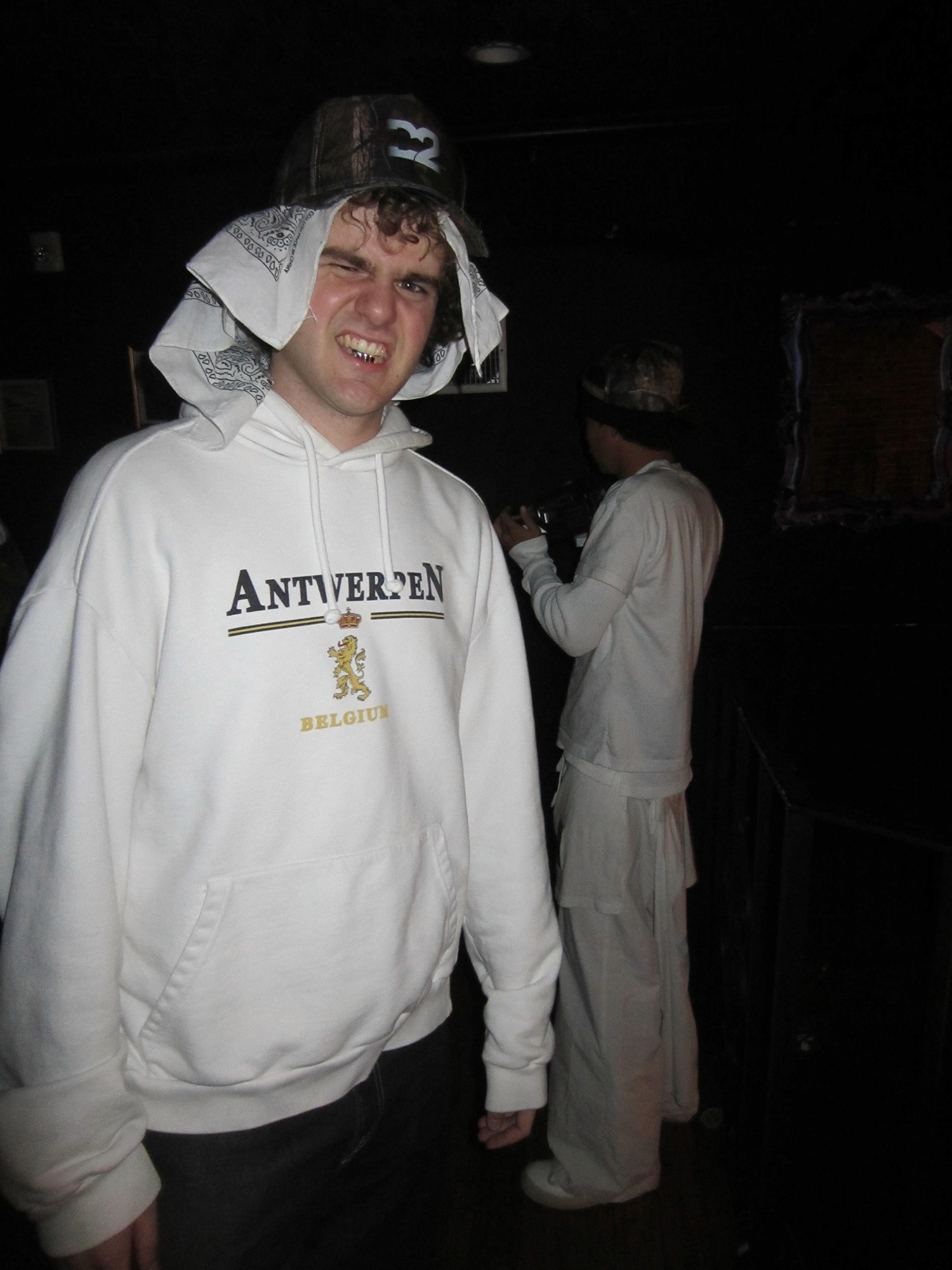
Producer Kat Lightning has already built a catalog that stretches across both the mainstream and the underground. With production credits for artists like Sexyy Red, Homixide Gang, Lil Yachty, and others, his work reflects a level of range and experience that goes well beyond his years. At the same time, Kat remains deeply locked in with underground artists, often working from the ground up to help shape their sound and creative direction. In this interview, he talks about his early influences, creative process, favorite tools, standout records, and why artist development continues to sit at the center of his approach. This interview was conducted by Rudy Manager via video call on January 17, 2026.
“At the end of the day, a producer can take an artist to the next level.”
- Kat Lightning
For people who are not familiar with you or your work, can you give us a brief introduction to yourself?
I’m Kat Lightning. I’m from New England and grew up moving around the region, but I’ve always been involved in music. I’ve been involved with it my whole life. I started playing piano in first grade, guitar in second grade, and I was kind of messing around making beats when I was around seven or eight. I got my copy of Logic when I was about ten, and I’m nineteen now, so I’ve been using it for roughly nine years. I do a lot of rap production, and I’m trying to get more into pop and indie band production as well. I’m really focused on expanding creatively because I love all kinds of music and want to do it all. That said, I’m pretty deeply rooted in the underground rap scene, with some mainstream work here and there as well. I’ve always loved the idea of artist development, and the underground is really where I feel most at home. I’m currently based in LA, and that’s the general overview of what I do.
How did you first get interested in music, and how did that eventually lead you into music production?
My cousins showed me Tha Carter III by Lil Wayne when I was really young, and I vividly remember it. It’s obviously a classic project, but at the time I didn’t really know what was going on. I didn’t know anything about production, beat making, or even what drum machines were. Growing up, all the instruments I was familiar with were piano, guitar, drum sets, saxophones, and things like that. That album was really my first conscious introduction to digital production and more electronic tools in music. It fascinated me right away, and I didn’t fully understand why, but I knew there was something about it that really resonated with me and that I needed to see through. Looking back, it was absolutely the production that pulled me in.
From there, my brother, my cousins, and I actually started rapping first. We had a little family rap group, like a lot of kids do. Everyone wants to be a SoundCloud rapper in middle school, but we were already doing it in elementary school. It was called Kid Money Productions. The music wasn’t great, but it definitely put a battery in my back. Seeing the process of creating something with my friends was really important to me. My mom is an art teacher and an artist, so I grew up making a lot of visual art. She’s an incredible painter and an incredible creative in general. But visual art is harder to be collaborative with, at least in my experience, compared to music.
That whole experience with my cousins and my brother was my first real introduction to creating in a group, and I loved it. I loved the idea of building something together from a young age. I was probably eight or nine at the time. That was really what started everything for me. Over time, I naturally discovered more music and more tools, and I started realizing that this was something I wanted to pursue seriously and work with people in one day. But that moment was definitely square one for me, without a doubt.
What was your process for improving your productions and your music back then? Did you have mentors, or were you watching a lot of YouTube, or studying music?
I watched a lot of YouTube. The thing is, this was genuinely back in the day, even though I’m still young. When I got Logic, you couldn’t even get FL Studio on a Mac. That wasn’t a thing yet. That’s a more recent development from the past decade or so. Because of that, I had to watch FL tutorials, since there were basically no Logic rap beat tutorials at the time. I’d watch those videos and then manually transfer everything over to Logic. I’d copy compressor settings knob by knob into Logic’s compressor, replicate entire effect chains, and figure out alternatives when certain tools just didn’t exist. There was no soft clipper, so I had to figure out how to recreate that effect myself. I couldn’t just follow along blindly. I really had to understand what was happening and adapt it, which forced me to learn what every single button actually did.
That process made me a lot better, because it gave me a deeper understanding of the tools. Over time, it also helped a lot to be around people who were leagues ahead of me, especially on a technical level. You can’t really teach someone how to have an idea, but you can teach someone how to execute one. Being around engineers, mix engineers, instrumentalists, producers, managers, A&Rs, everyone, there was something to learn from every role. Once I started being in those rooms, even just in group chats or conversations in DMs, that became a huge part of my growth.
How has your experience been studying music at the university?
It’s kind of similar to what I mentioned before. You can’t really teach an idea, but you can teach the technical side of executing it. I think studying music has been really good for refining the skills needed to bring ideas to life, especially on the production side of things. From an engineering perspective, it can be super helpful too. You learn Pro Tools, which is the industry standard, and you get exposure to consoles and other technical systems. That isn’t really my main focus, but I definitely appreciate what I’m gaining from that side of it.
In terms of production, a lot of it is technical, but it also puts you in an environment with other people who want to do the same thing as you. You end up feeding off each other creatively, especially outside of the actual coursework. It goes back to both technical growth and community, and I think school offers a strong combination of those. For me, a big reason I chose USC was to be in LA and to be able to work there on my own terms. I love the program, but the location was a huge factor as well. School gives me a reason to be in LA and also provides a sense of structure and stability. It’s truly a privilege to be there, and I really love it.
One of your bigger placements is a song with Sexyy Red called “Shake Yo Dreads.” How did it come together?
That one’s kind of an interesting story, and there’s honestly a lesson in it. There’s a real moral to it. I used to work with a rapper named Deric, who was a smaller artist from Florida at the time but super talented. He had a manager named Don Mozart. We were really locked in at one point, but then I didn’t talk to Deric or Don for a while. Later down the line, I reconnected with Don, and he was working at Rebel Music, which is where Sexyy Red is signed. From there, it all came together naturally through Don. He’s a manager and A&R, so it was a simple send a pack situation, and that’s how it came together.
The lesson in all of that is that everyone is valuable. Every single person matters, even if you don’t know how or why in the moment. That record, “Shake Yo Dreads,” really changed my life. I’m incredibly grateful for it. Shout out Don.
How do you usually like to approach working on music from scratch?
I really like not having any direction. I love making a pack for an album, but at the same time, I honestly make much better music when there’s no set direction. I don’t really have a fixed process like always starting with melodies or always starting with bass. Sometimes I’ll start with something random, like a clap and a pluck. It doesn’t really make sense, but that’s usually where the best ideas come from. My creative process is really just about experimenting.
One thing I’ve been very intentional about, especially over the past year, is actually finishing everything. That was a big resolution for me. Even if I don’t love something, I’ll trust my gut and finish it. When there’s no direction, going with your instincts is important, and even if you’re unsure in the moment, you might come back to it later and end up really loving it. I realized I was leaving too many ideas half finished, and it started slowing me down creatively. After days, weeks, and even months of making unfinished beats, it became discouraging because I didn’t have much completed work. It just wasn’t efficient. Lately, I’ve been doing more instrumental recording, so I’ve been trying to start with that, but overall it’s still very open ended. Whatever the first cool thing I hear is usually where I’ll begin, whether that’s a hi hat, a pad, or something else entirely.
What are some of your favorite VSTs that you’re using at the moment, and do you also like working with hardware gear?
In terms of hardware, I have an MPC 2000XL, and that’s one of my favorite pieces of gear, period. I’m really lucky to have one, and I’m very grateful for it. Other than that, most of the hardware I use right now is guitars. I’m currently living in an apartment with five roommates, and my personal space isn’t big enough to have something like a full synth rack. Because of that, most of the gear I use is at a friend’s place, in a studio, or somewhere outside of my apartment.
I definitely plan on getting more hardware once I have the physical space for it to make sense. As a keyboardist, I’d really love to build out a synth collection one day.
What about VSTs?
In terms of VSTs, I’ve always loved Nexus. It’s something I’ve used since I was a kid, and I think it was actually the first plugin I ever got. That came from watching FL Studio videos, like tutorials on how to make BrickSquad beats or Lex Luger beats. I was all in on that sound. Then the whole MexikoDro wave happened, which was mostly Purity and Nexus along with Wavestation, and while I don’t go back to them much anymore, they’re definitely honorable mentions for me.
More recently, the newer versions of Omnisphere and Serum have been super inspiring. Omnisphere feels really fresh, and Serum with the granulator has been especially dope. Lately, though, I’ve been more focused on processing than the patches themselves. I’ve been doing a lot with pedal board style effects, outboard style processing, and experimenting with effect plugins like Arturia’s Fragments. I’ve been trying to keep the patches sounding more basic and then push them through interesting processing chains. Logic’s stock plugins are also great. Alchemy in particular is an incredible plugin. I wish I could get it on FL, but it is what it is.
Can you share how the track “Murda” for Lil Yachty came together?
That was a really fun time. Cade and I were doing a lot of cool sampling in that general style. I remember we were working with all kinds of unexpected sounds. There was a Stevie Wonder type beat in the mix, we sampled some old house records, and we even sampled Maggie Rogers too, shout out to her. It was a lot of sounds you wouldn’t normally hear flipped into that type of beat, but for that record it really worked. That beat is honestly one of my favorite beats I’ve ever made, and we were definitely having a great time during that whole process.
After that, the record just kind of moved along down the pipeline. One thing led to another, and suddenly it was out and doing what it did. “Murda” ended up becoming a hit, and it’s still one of my favorite tracks I’ve worked on.
Do you have a favorite song you’ve made across your entire catalog?
That’s tough. I don’t think I have one single favorite song, but I definitely have favorite people that I work with. I feel like I make my best stuff every time I work with Glokk40Spaz. I love Spaz. I also feel like I make great music with GoVanni!, and lately I’ve been working with Babe Dylan, and we’ve been making some really crazy stuff together.
As far as picking one specific song, I’m honestly not sure. Everything has a different connection to it. A lot of the songs I’ve worked on aren’t random at all, especially since I’m not really working on loops most of the time. Usually I’m making a beat all the way through and finishing it in the room with someone. Because of that, almost every song has a story attached to it, and that makes them all special in different ways.
One moment that really stands out to me, though, is the freestyle Kevin Hart did with the AMP Boys. That one was just fun. It feels like one of those side quests where you never expect it to happen, and then it suddenly does. I love moments like that. That kind of stuff is really my favorite.
What advice would you give to new producers who are just starting out and want to work with established artists and start getting songs?
Build through development. Find someone who’s really small that you genuinely like and believe in, someone you truly think can go somewhere. At the end of the day, a producer can take an artist to the next level. Even if they’re super early, if you see the potential, take it to the moon. That’s honestly my number one piece of advice, and I think it’s been responsible for most of my career. If it’s not songs with artists I helped develop directly, it’s songs that came through people I built relationships with along the way. It all comes back to development. That’s the underground, and that’s really my favorite place to be.
I love working on mainstream records too. Growing up, I loved all of it. As a kid, especially in middle school, I looked up to artists like Lil Yachty and Quavo, so being able to work in that space is incredible. But there’s also nothing more personally rewarding than putting a lot into something and seeing it pay off exponentially. If you get a big record with Lil Baby or Drake, the record is going to do well because they’re already huge. When you build with people from the ground up, create a small team that feels like a family, and grow that together, that’s where longevity really comes from. I love the major placements, I love the build, I love all of it. I just love music.
Who are some artists that fans should be paying more attention to right now, especially from the underground?
If you’re into more indie pop leaning stuff, Babe Dylan is super dope. My homie Sean Pitaro is doing this EDM hyperpop kind of vibe, and he’s really carving out a cool lane with it right now. GoVanni! is the truth too. GoVanni! is the future for real. Those are three artists I’d absolutely put my money on.
As far as underground rap goes, okgutta is fire. He’s super dope. My boy Velly, also known as kickdoorvelly, is crazy too. His new album was super fire. Honestly, there’s a lot going on right now. Way too many to name, but there’s so much good music coming out of the underground right now. It’s definitely an exciting time.
What are your plans for this year, both personally and professionally?
My number one goal kind of ties into both, and that’s really about expanding my horizons. I want to work more in pop, indie, and R&B music. Hip hop will always have my heart because that’s how I started and what pulled me into music in the first place, but I also have instrumental backgrounds that I don’t feel like I’m fully applying right now. I can apply them in hip hop, but I’m not completely satisfied with how I’ve been doing that, so part of this year is figuring out how to bridge those worlds better, because I know it’s possible.
I also want to focus more on working with artists who exist in completely different spaces. Especially being in LA, everything is here. There are people my age making noise music, folk music, and all kinds of things, often in the same circles. The only thing really stopping me from tapping into that has been myself, and I don’t want that to be true anymore. I want to be more open creatively. That’s the biggest goal for this year. I also want to work on some other cool projects. I’d love to make music for a fashion runway, and one of my personal all time goals is to create a dance for Fortnite. I don’t know how that’s going to happen, but I believe it’ll come together when it’s supposed to.
Overall, I’m really interested in production outside of hip hop and even outside of just songs. Whether that’s scoring, sync work, or anything else, I want to explore it. I don’t have a ton of experience in those areas yet outside of placements, so I’ve been working with a few videographers and doing free projects, mainly making music for their visuals. I’m focused on getting my foot in the door and getting my reps in right now. It feels like a really good time right now.
Follow Kat Lightning on Instagram: @katlightning
More Blog Posts
See our latest blogs