Exclusive Interview
Produced by: Rudy Manager
Edited by: Rudy Manager & Andrej Aroch
Steve Bilodeau - Producer and Guitarist Behind J. Cole’s The Fall-Off
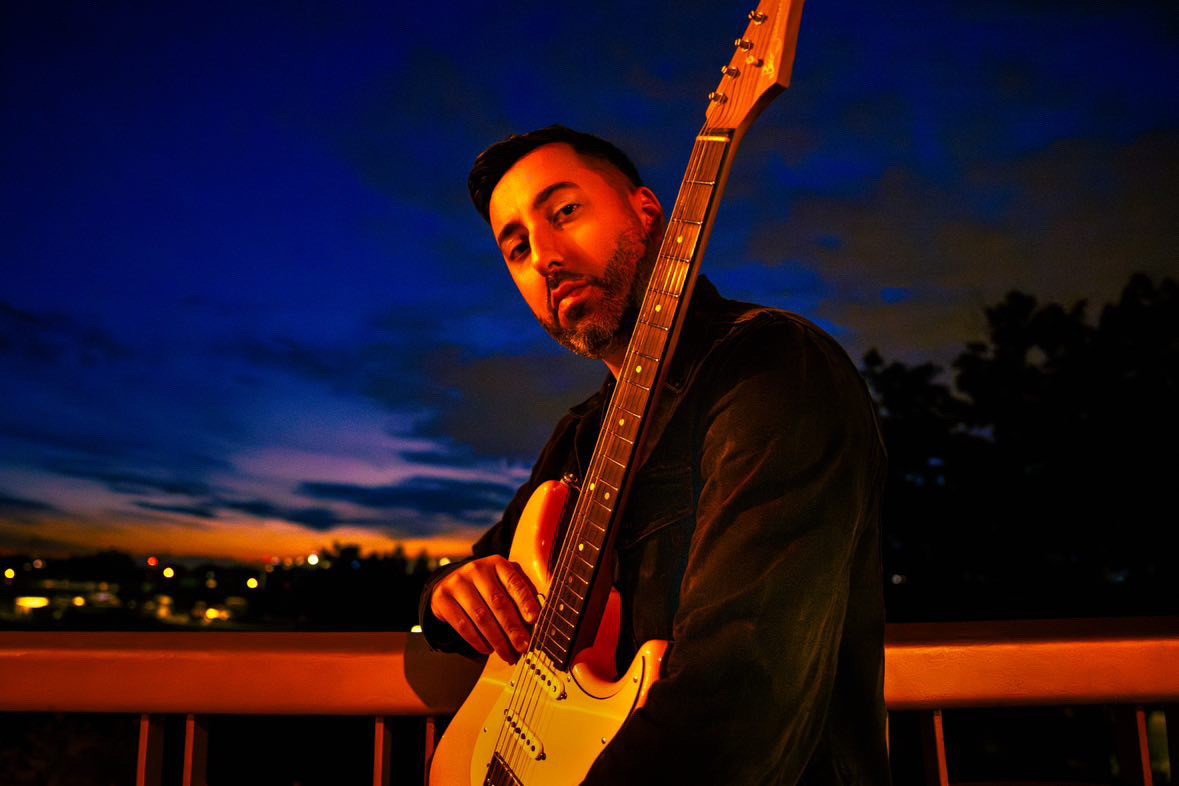
Canadian producer and guitarist Steve Bilodeau, formerly known as Billa Joints, has built a journey that spans from his childhood love of music at Canadian ice hockey rinks to creating alongside some of the biggest names in hip hop. A longtime collaborator of Grammy-winning producer T-Minus and a key contributor to multiple records on J. Cole’s highly anticipated album The Fall-Off, Billa Joints has earned recognition for his genre-blending approach that fuses virtuosic guitar work with forward-thinking production. In this Studio Talks interview, he opens up about his unconventional journey from jazz-trained guitarist to sought-after producer, the story behind meeting T-Minus and J. Cole, the creative process behind his contributions to The Fall-Off, and his advice for new producers. The conversation was conducted by Rudy Manager via video call on February 17, 2026.

“At the end of the day, music and art are about human experience and expression.”
- Steve Bilodeau
Can you share how you first got interested in music and how you eventually transitioned into becoming a music producer?
It’s been a long journey. I didn’t start out as a producer. I started as a musician and a guitar player. I’ve always loved music. I remember being four or five years old playing hockey here in Canada, and whenever they played music at the rink, I’d get more excited and actually play better. My dad even pointed it out. He’d say, “You always play better when there’s music on.” Even then, I knew I had some kind of connection to it.
I started piano lessons around the age of eight because my parents thought it would be good for me, but I hated it. It was classical piano and everything had to be played exactly as written. That just wasn’t my thing. Around twelve, I got into Blink-182, Green Day, and Sum 41, and I begged my parents for an electric guitar. When I finally got one for my birthday, I played for hours every day. By thirteen, I was in a band playing the school talent show. Then I started studying seriously with a great teacher in Ottawa named Carl Bovell. He introduced me to Eddie Van Halen, and when I heard “Eruption” at fourteen, it completely blew my mind. That was my turning point. I became obsessed and practiced constantly.
Later, I got into jazz and went to McGill for music school. That’s where I discovered artists like J Dilla, Common, Erykah Badu, Jill Scott, and D’Angelo. I didn’t grow up around hip hop, but that jazz influenced R&B and hip hop sound really grabbed me. I became curious about how beats were made and how sampling worked. After graduating at 22, I bought a Maschine and started teaching myself production. I was already working as a guitarist, but production was totally new to me.
Over time, I fell in love with being in the studio environment. I’ll always love playing guitar, but creating something new from scratch became the most exciting part for me. I never planned for production to become my main path, but it evolved naturally. Especially in the last five years, I’ve focused much more on producing than on being a live guitarist.
Do you remember the first artist you started working with and what your first placement was?
I worked with quite a few independent artists before I ever worked with anyone well known. When I was living in Boston, I connected with a few local artists, and the first placement I really remember was with a rapper named Kyle Bent. Shout out to Kyle. We haven’t been in touch in a while, but around 2015 or 2016, I did two or three beats on one of his projects. He was actually the first person who ever paid me for beats. I remember being so excited, like, Oh my God, I can actually get paid for this. That was a huge moment for me.
After that, when I moved to New York, I started meeting more artists. One of the most important collaborations during that time was with one of my close friends, Gaël, who’s an incredible rapper and artist. We really locked in and made a full project together of about seven or eight songs. We spent close to a year working on it, doing sessions consistently and really refining the songs. Looking back, that experience felt like it was preparing me for what was coming next, even though I didn’t realize it at the time.
Shortly after that, I met T-Minus, and working with him is what really opened the door to bigger artists. But those early experiences with Kyle, Gaël, and a few others in New York were foundational for me. That’s really where everything started to take shape.
Can you share how you met T-Minus?
It’s actually a funny story. I was living in New York in 2020 when COVID hit and everything completely shut down. No one knew what was going on or how long it would last. After a few weeks of barely being able to leave my apartment, I decided to go back to Ottawa and stay with my parents for the summer. I figured it would be temporary and that I’d return to New York soon after.
At the time I was single and on Bumble. I met a girl and we started dating, and she happened to know T-Minus’s now wife. She knew I was a musician and producer and said I should meet T at some point. Eventually, we went over to his house, she introduced us, and we hit it off right away. He told me to grab my guitar, and we started cooking up. We immediately had chemistry. I still have the first beat we made together, and I hope one day it comes out because it’s fire.
That summer I started going to his place almost every weekend and we kept working. By the end of that summer, he offered me a deal and said he wanted to sign me. I was technically still living in New York, but I knew this was an opportunity I couldn’t turn down. So I took the leap, moved to Toronto, and started working with him. The girl and I didn’t end up staying together, but I’m grateful because without that connection, I probably never would’ve met T-Minus.
It really felt like one of those moments where preparation meets opportunity. I’d spent twenty years playing guitar and developing my skills, and then the right situation lined up. Our abilities complemented each other, we got along as friends, and it just worked. I always joke and say shout out to Bumble because sometimes these life changing moments come from the most random places.
How do you usually approach making music from scratch when you first open your DAW?
Honestly, it varies a lot. I don’t have much of a set routine, and I think that’s part of what keeps it fun for me. A lot of times I’ll go into the studio and just see how I’m feeling that day. Maybe there’s a piece of music I’ve been listening to and something about it has caught my ear, so I’ll try to explore that idea in my own way. Or I might be inspired by a certain guitar style, like flamenco, something with a Mexican influence, or some kind of jazz vibe, and I’ll follow that direction and see where it leads.
Lately I’ve also been getting more into writing songs and working on top lines, doing pop demos and writing hooks. Producing vocals at a high level is actually really challenging, so that’s been an exciting area for me to grow in. But if I had to say what I do most often, it usually starts with picking up the guitar and seeing what comes out. A lot of my ideas happen late at night or early in the morning when I’m half awake, just playing without overthinking. Sometimes I’ll stumble on a chord progression or a little phrase by accident, and suddenly I’m like, That’s kind of cool. Then I’ll record it on my phone, bring it into the studio later, and start building around that idea. From there I might add vocals, piano, or send it to someone to collaborate.
For me, it really comes down to feeling. Every time I’ve tried to be super structured about it, it hasn’t worked. I know some people thrive on routine, but I need that spontaneity. That’s what keeps it exciting and creative for me.
What are some of your favorite VSTs, and do you also use any hardware synthesizers?
I’ve got a Prophet Rev2 that I picked up about six months ago, and I love it. I’ve been using that a lot. I also have a Fender Rhodes in the studio, which is amazing, although it needs a bit of fixing. Those pieces of hardware definitely bring a different kind of inspiration into the studio.
As far as VSTs go, I love U-he Satin. It’s a tape emulator and I use it on almost everything, especially guitars. It just adds a really nice tape character, and there are so many presets and settings to play with. I used to use RC-20 quite a bit, but once I found Satin, I pretty much switched over. It sounds very realistic to me and adds a lot of personality. When I record guitars, I usually use a stereo pair of Neumann KM 184s, and they already sound great, so I don’t need to do too much. Maybe a bit of Satin, some EQ, compression, and that’s often enough.
I also really like Bloom by Oeksound, and I’m a big fan of the FabFilter stuff. Pro Q is kind of a staple. Baby Audio’s Spaced Out is another one I love. It has these really interesting reverbs and textures that can completely transform a sound. Sometimes I like to ignore the so called rules and just experiment. People say you shouldn’t put reverb before distortion, but I’ll try it anyway just to see what happens. Sometimes it doesn’t even sound like a guitar anymore, which I love. When someone hears it and says, Wait, that’s a guitar, that’s the best feeling. At the end of the day, though, my guitars are usually the first source of inspiration, and the VSTs come in after I’ve captured something solid.
What are your thoughts on AI in music production?
That’s the controversial question these days. I don’t have a problem with AI at all. I think it’s a great tool. The key thing is remembering that it’s just a tool. It’s no different from any other technology we use in the studio. Personally, I don’t really want to listen to music that’s made entirely by AI, because I don’t think there’s going to be any soul in it. That’s not disrespect toward AI. It’s just the reality that it’s a computer. It’s not a human being. When I listen to music, I want to feel something human behind it, and no matter how advanced AI gets, it’s not going to replace that.
That said, I think it can be incredibly useful. If AI helps you find the right snare faster, generate new sounds, or clean up and edit a session more efficiently, I’m all for it. Anything that saves time and helps the creative process is valuable. But at the end of the day, music and art are about human experience and expression. I don’t think fully AI generated music should be compared directly to music made by people. If there are AI music charts, that’s fine. Just keep them separate from human charts. For me, AI will always be something that supports creativity, not something that replaces it.
Can you share the story of how you first met J. Cole?
The first time I met Cole in person was in LA in December of 2021. I had been signed to T-Minus for just over a year at that point, but because of COVID we had mostly been working out of Toronto, just cooking up beats. That LA trip was the first time we actually traveled together for sessions. I wasn’t officially invited. T told me he was going to LA to work with Cole and said if I wanted to come, I could pull up to the sessions. I was like, I’m not going to miss this opportunity.
Before that, I had worked with Cole a couple of times over FaceTime while at T’s house. We’d be making something and T would call him, and one time I was recording guitar while Cole was listening. He was feeling what I was playing. So when I met him in LA, he was like, you’re the guitar player in Canada with T-Minus, right? That immediately broke the ice. That week was intense and inspiring. There were producers everywhere, different rooms going at the same time, and a bunch of Dreamville people. For me, it was a little overwhelming, but in the best way.
Over the next year, I kept showing up whenever I could. If they were in New York at Electric Lady Studios, I’d fly out, stay with a friend in Brooklyn, and take the train in every day just to be part of the sessions. I wasn’t officially part of the camp yet, but I knew I had something to offer and I was determined to prove it. Cole came to Toronto a couple of times too, and I kept putting in the work. Then in December 2022, he called me and asked if I could come to New York with T-Minus. That was the first time he officially flew me out. I was over the moon. It felt like, okay, I did it. Since then, I’ve been working with him consistently for the last few years.
You’ve contributed to multiple tracks on J. Cole’s new album The Fall-Off. What was the process like working on those records?
It was different for every record, honestly. I’ll start with “39 Intro” because that was the first song I really wrote with Cole. The first time he flew me out was in December 2022. Our flight was at six in the morning, we barely slept, and when we got to his place. I was putting my stuff down and Cole just looked at me and said, “Yo, let’s write a song.” Just guitar and voice. It caught me off guard a little because it was my first time being flown out, but we sat down and wrote most of “39 Intro” right there. When T-Minus woke up and heard it, he was like, You guys wrote this? This is fire, and he immediately started building it out.
“The Let Out” was another major one for me. We were just jamming and I started playing the main riff. T-Minus is so quick with drums that it felt like playing with a live drummer. Cole started singing ideas while we were all vibing in the control room, and that became the foundation. I improvised that intro in what was basically a first take and they kept it.
Some of the other tracks were quicker moments. “Poor Thang” and “Run a Train” were songs where I added guitar after the core production was already there. “Bombs in the Ville/Hit the Gas” and “Legacy” were wild because he’d call me last minute and say, “Can you get on a flight in a few hours?” I’d fly to New York, record all night, and fly back the next morning. With “Poor Thang,” I didn’t even think I’d make the record because it’s such a hard rap track and usually they don’t want guitar on those. But I found this little funky pocket that almost had a Michael Jackson kind of feel, and Cole told me to keep it.
Honestly, I think “39 Intro” and “The Let Out” opened the door for everything else. Once those records connected, it made it easier for me to contribute to the other songs in different ways.
Thanks so much for sharing that. It really gives the audience perspective on how those records come together.
Absolutely. I’m happy to share because I’ve always wondered the same thing when I was on the other side of it. You see an album come out and assume it was all made recently, but that’s rarely how it actually works. You never know when a song was created or what order the records came together in. Some songs are seven, eight, even nine years old. I remember T-Minus telling me that “Legacy” was about seven years old by the time it came out.
Other songs can come together really fast, sometimes just weeks before the album drops. Inspiration hits, everything clicks, and suddenly it’s done. That contrast is what makes the process so interesting. You really never know how or when a record is going to come together.
What would you consider your favorite production from your discography?
Definitely “The Let Out.” If I’m being honest, that’s the record I’m most proud of. When we made it, I just knew it was special. It felt fresh right away. The vibe was different, and it put me in a mood that I hadn’t really felt before on a Cole record. It expanded even my own idea of who he could be as an artist.
It’s been interesting to see people react to it in a similar way too. A lot of listeners are like, wow, I didn’t expect Cole to do something like this. Some people don’t get it at first, but then they come back and say, okay, I see it now. For me, it’s special because the guitar is such a big part of it. There’s twelve string guitar, acoustic guitar, electric guitar, so many layers, and it really pulls from the influences that I grew up on. To have that kind of sound land on a project of that scale feels surreal.
“39 Intro” is a close second, but “The Let Out” stands out because it felt like we captured lightning in a bottle. T-Minus crushed it too. The bassline, the drums, the way it all came together from just jamming in the room, it was one of those moments where everything clicked.
What advice would you give to upcoming music producers who want to establish themselves in the industry and start working with artists?
I talk about this a lot with my students because I do one on one mentoring in production and guitar. I really think it comes down to two main things. First, you have to become undeniable. That might sound vague, but what I mean is you have to get so good at what you do that even if someone doesn’t personally like your style, they still have to respect the level. Not everyone is going to love your music. That’s impossible. But they can respect the craft. Getting to that point takes years. I’d been playing guitar for about twenty years before I met T-Minus. I put in thousands of hours, studied, completed a master’s degree, played jazz, and played in bands. When the opportunity came, I was ready. If I had only been playing for a few years, I don’t think the outcome would’ve been the same.
The second thing is you have to get out there. You can’t just stay in your room hoping someone discovers you. Collaborate with other producers, work with local artists, connect on social media, travel if you can, build relationships. If your work is undeniable and you consistently put yourself in rooms where things are happening, eventually something will happen. It probably won’t happen quickly, but consistency matters.
You also have to genuinely love it. I wasn’t making music to chase success. Of course, everyone wants to succeed, but I would be making music whether I was on The Fall-Off or not. I’ve always done it because I love it. Ironically, I think that’s part of why things worked out. It was coming from a pure place. And I do have to shout out T-Minus. He’s become like a brother to me. Without him, I wouldn’t be in this position. He’s an incredible producer, an incredible mentor, and a leader in the community. He saw something in me, and when preparation met opportunity, he opened the door. He’s honestly the best producer I’ve ever worked with. That’s why I really believe if you put in the work, become undeniable, and stay active and open, it’s only a matter of time before something shifts for you.
What plans do you have for the rest of this year, both personally and professionally?
Right now, I’m honestly just taking everything in with The Fall-Off. It’s been a big moment, so I’m trying to appreciate it. But at the same time, I just want to keep cooking. I want to work with more artists and keep expanding. I’m really interested in getting more into the pop world, and I’d love to go to Nashville and tap into some country sessions as well. I don’t ever want to limit myself or say I’m only this kind of producer. I’m always curious. I always want to explore what’s possible.
I’ll definitely keep working with T-Minus, and beyond that I’m also building my own artist project. That’s something I’m really excited about. I’ve got a lot of demos and ideas that I need to finish, and it’s very much my vision. I’m writing, producing, singing, and playing all the instruments myself. I might bring in a little help here and there, but it’s going to be mostly me. I finally feel like I’ve figured out the sound I want to go for, so the goal is to hopefully drop a single or two by the end of the year.
It all comes back to the same thing. I just want to travel, meet great creatives, and keep making great music.
Follow Steve Bilodeau on Instagram: @billajoints
More Blog Posts
See our latest blogs