Exclusive Interview
Produced by: Rudy Manager
Edited by: Rudy Manager & Andrej Aroch
Stephenthethird - New York Producer Behind Records for Joey Bada$$, overtonight & KayCyy
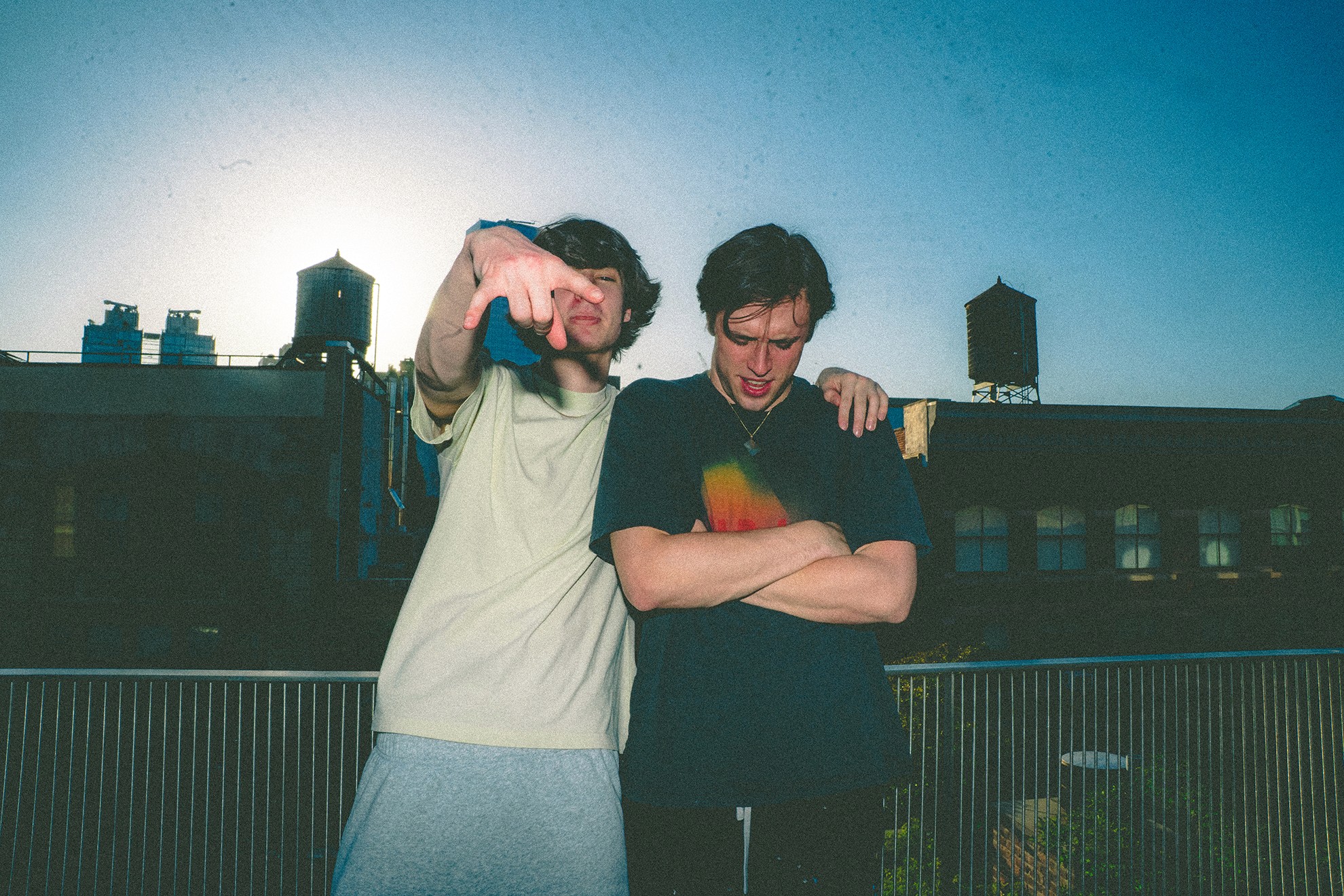
Studio Talks sat down with producer Stephenthethird in New York at Boysarerolling’s studio for a wide-ranging conversation about his journey from making beats in his bedroom to building a career rooted in collaboration, community, and purpose. In the interview, Stephenthethird reflects on growing up in New York, studying at NYU’s Clive Davis Institute, developing his work ethic, and learning how to navigate both the creative and business sides of the music industry. With credits and collaborations linked to artists like Joey Bada$$, Chlöe Bailey, KayCyy, Joony, Lola Young, and overtonight, Stephenthethird represents a new generation of producers who are not only focused on making great records, but also on building something meaningful around them through his creative company, The New York Company.

"My biggest advice is that all creatives need to understand their business."
- Stephenthethird
Can you share the story of how you first got into music?
I was born and raised in New York, and I grew up playing a lot of sports. My parents had us all playing sports. My dad grew up playing baseball, so I played football from around the age of 10.
At that time, we always had songs of the summer. There was a Justin Bieber song, “White Iverson” by Post Malone, “Lockjaw” by French Montana featuring Kodak Black, and that whole era of records. It was a great time for music. That’s when I really got exposed to Black music and Black culture, specifically hip-hop, and from there I got really interested in rapping.
For about three weeks, I was a 13-year-old white rapper, which was pretty funny. I had songs with titles like “This Song Is Untitled,” just silly, goofy stuff. But I quickly realized rapping wasn’t it for me, so I started making beats. I got really interested in GarageBand and Logic, and pretty quickly, I was making music all the time.
I played trumpet growing up in school, but I never took it that seriously. When I found Logic, I thought, “Okay, cool. I’m going to start recording and sampling.” I was sampling, adding drums, and putting things together, even though I didn’t really play any instruments. That’s how my first tracks started coming together. I also started posting on YouTube, making all kinds of type beats and going through that whole phase.
What was the process of improving your skills like, from when you first started to when you began working with artists?
It was a long journey. I found music really early, around 14, and I remember thinking, “I want to do this forever.” I was lucky because my high school had a music studio. There were a couple of other kids in my grade who made music too, named Joshua and Matt. Shoutout to them. They didn’t produce, but I did, and I knew how to record vocals, so they would sing and rap while I made beats. We didn’t fully know what we were doing, but we stayed after school every day making music together, and that’s really how I started getting better.
By junior year, around 2020, my New Year’s resolution was to make one beat a day. Then COVID happened, and I suddenly had all the time in the world, so I stuck with it. I wanted to work with artists, and I found Beam on Instagram. I didn’t know who he really was yet, but through him I ended up connecting with a producer named T1mmyy. He was 14, we got along really well, and we started playing Warzone and making beats together all the time. A couple of months later, he called me and said, “Yo, we got one with Beam, and I think it’s going on the album.” I was 17 at the time, and that song ended up coming out during my freshman year of college.
At that point, I was playing college football at Hamilton. I was a good football player in high school, but Hamilton was a small school upstate, and no one around me was really doing music seriously. I was just in my room making beats every day. Then a friend from high school told me, “If you want to be this big producer, you have to come back to New York.” When I told my mentor about it, he said, “You’re going to have to go. I don’t care what you have to do. If you get in, you’re going.”
Once I got back to New York, I was able to build a real community and team. Arno, who you just interviewed, helped me grow so much as a person and as a producer. That’s my brother forever. Through that community, I’ve been able to work with people like Joey Bada$$, KayCyy, Lola Young, and Chlöe Bailey. That sense of teamwork has been huge for me because we all help each other grow. You can move fast alone, but you go further together.
I also started picking up instruments when I was 18. I had forgotten my laptop at school, and then my family got COVID, so I couldn’t go back for two months. I had an old computer with no plugins and an old guitar sitting in the corner of my room, so I thought, “Forget it, I’m going to start learning.” I used YouTube to teach myself guitar, bass, and piano, and that’s how I started bringing those instruments into the music I make today.
What has your experience studying music at NYU been like?
The school my friend told me to transfer to was the Clive Davis Institute of Recorded Music at NYU. Clive Davis is one of the most legendary music executives of all time. He’s signed so many iconic artists.
I found out I got in during that studio session, and I started at NYU in the fall of 2024. But honestly, I came back to New York more for the city than just for NYU. I knew I had to be in a place where I could be around other creatives, meet people, and network. Clive has been an amazing resource for that. There’s endless mentorship and support from people who are really active in the industry.
My mentor there is Bobby Wooten. Shoutout to Bobby. He’s Sabrina Carpenter’s bassist and musical director, and he’s done production with a lot of different people. A lot of the teachers have real industry experience, and through school, I’ve been able to build important business relationships.
The curriculum has been great too. I’ve learned how to operate old school studio setups, use a patch board, and record properly in live rooms. My engineering skills have gotten a lot better, and so has my understanding of the music business. A lot of my teachers have helped me avoid bad deals, and I even met my lawyer through NYU. Overall, it’s helped me become more of an adult in the industry.
You mentioned that a few years back, you set a goal to make one beat every day for a year. What’s your work ethic like now, and how many beats or samples do you typically make in a week or month?
I work really hard. I think everyone today is looking for a cheat code, like, “How can I get to success as fast as possible?” But it took me a long time, and I’m really lucky I found music young. That’s not to say you can’t start later, but I started early, put a lot of time in from a young age, and I still continue that to this day. Every day, I probably make two to five ideas, and I practice my instruments every day too.
For me, the goal is to be the best producer in the world, the best producer in New York, all of that. I can’t do that if I’m not studying the game, putting in my hours, and getting better at my craft. But there’s also joy in it. People think it’s just grind, grind, grind, but you have to love it so much that you’re willing to sit in a little room with your instruments and make a lot of noise by yourself. That’s the key to succeeding in music, along with being good with people.
The work ethic is everything. Arno and I really put the time in. A couple of weeks ago, we were working with this artist Joony from the DMV, and we did a session that lasted more than 12 hours at two different studios, from Brooklyn to Manhattan. We made two songs and four beats, and that was real time and real sacrifice. It was a 5 p.m. to 5 a.m. session. Another time, my good friend A$AP Illz called me at 2 in the morning about a session with Oranj Goodman at Platinum Sound Recording Studios. I ended up getting home at 8:30 in the morning and had to be up again at noon.
If you want to make a living from music, it takes sacrifice, commitment, and a real love for the craft. Every time I’m creating, it doesn’t feel like work. You don’t have to pay me to make music, but thankfully I’m able to make money from it. So I’d say focus on the joy and focus on doing it every day. I don’t really believe in creative block. I believe in a lack of study. Whenever I feel stuck, the best advice I can give is to go learn a song on piano. It could be “Happy Birthday,” it doesn’t matter. Learning a song, playing an instrument, or studying a production technique opens up a new way to look at the world. For beginners, remake your favorite song, whether it’s Travis Scott, James Brown, or anything else. That’s a great challenge, especially if you don’t play instruments yet.
Can you share any business advice you’d give to up-and-coming producers?
First and foremost, you can do everything yourself. You don’t need anyone except yourself, a lot of research, good questions, and a clear understanding of what you want. The music industry is the Wild West, and you get to decide what you do and don’t do. A lot of people look at signing a deal as this big moment that makes them feel official, but that’s not true. You don’t need a deal. When you sign to a label or any kind of agreement, you’re essentially signing away certain rights, so you have to understand what you own.
Every song is intellectual property. If I produced, wrote, and recorded the whole thing myself, I own 100% of the sound recording and publishing. But when you sign to a major label, a lot of those deals come with options that aren’t always mutual, which means the label can choose to continue while the artist can’t always walk away. That’s how people get stuck in deals they don’t recoup from, and their careers can get strangled. I’ve been on major projects where I didn’t get paid or credited for months, even though these are big companies. Seeing that made me more careful with deals and inspired me to start building something of my own.
That’s what led me to create The New York Company. The idea is to build a company led by creatives and for creatives. I can’t sign an artist to a huge deal, but I can offer access to high caliber people and resources, from studios and producers to publishing, distribution, live music partners, management, and marketing. The goal is to create assets for everyone involved and help emerging artists build real careers in New York through transparent deals.
My biggest advice is that all creatives need to understand their business. Even if you don’t have a manager, you should have a list of every song, your splits, how much you got paid, how much of the master you own, and where everything is registered. Have your music registered with BMI and the MLC. That’s the bare minimum, and a lot of people still don’t have their music registered properly, which means they’re missing money.
At the end of the day, breaking artists now takes both creative and executive thinking. I saw that firsthand on a project with Empire, where we helped take an artist, overtonight, from 10K monthly listeners to 2.5 million monthly listeners by combining creativity, strategy, and consistency. So the answer to a lot of artists’ problems is consistency. Be consistent with your work ethic, be consistent with your releases, and understand your business. That’s how you put yourself on a path toward real growth.
I want to ask about your Joey Bada$$ record “3 FEET AWAY.” Can you share the story behind it, from making the beat to the song being released?
We were at the house of my good friend Arno, who goes by Boysarerolling. Arno had been working with Joey for a while, and we were doing a week of sessions with these German producers, Tobi and Wizzle. Shoutout to Toby and Wizzle, they’re great. We were cooking up, and Wizzle started playing this guitar melody. I recorded it in Voice Memos, then I played electric guitar on it too, and everything was going really well.
Then I looked to my left, and my good friend Feez walked in with someone behind him. I was like, “Oh, that’s Joey.” I had met Joey a couple of times through NYU because he was the resident artist there for a few months. He came up to me and said, “Have we met before?” I told him we had met at NYU, and he was like, “Cool, cool.” He sat in the corner for most of the session, so we thought maybe he wasn’t really feeling the idea and started making something new. Then he was like, “What are y’all doing? I was messing with that.” So we went back and finished the melody and the sample with me, Tobi, and Wizzle, and then we started working on the drums.
At that point, I actually had to leave the session because I had a meeting at school with one of my mentors, Hank Shocklee. He founded Public Enemy and was a member of The Bomb Squad, so he’s a legendary New York hip-hop producer. It was a really cool day for me because I was working with one New York legend, then going to meet another New York legend, and then coming back to the same session. By the time I got back, they were recording vocals. The session went great, they made a couple more songs, and we all just hung out.
That moment was crazy for me because I grew up on Joey Bada$$. The first song I ever saved on Spotify was “Paper Trail$.” So for me, it was a real full circle moment. It was one of those things my inner child would’ve been amazed by, like, “You really did that?” I think a lot of producers feel that way when they work with an artist they grew up listening to or always dreamed of working with. Turning those dreams into reality is what this is all about.
We made the song in the spring of 2025, and it didn’t come out until August. I didn’t actually know it was dropping until Tobi texted me and said, “Did you see the news?” I was like, “What do you mean?” He said, “Joey’s dropping an album, and our song’s on there.” The song came out the same day I was moving into my dorm for senior year, so I was blasting it in the car all day. It was a great moment, a real New York City moment, and something my inner kid would be really happy about.
When Joey recorded the vocals and you heard them for the first time, did you know it was going to be a banger, and did you have a feeling it would come out?
I had a feeling it was a good song, but I didn’t know it was going to come out. That’s the thing about the music industry. You can have so much good music, but you never really know what’s going to happen with it. You just have to wait, hope, and pray.
I have a lot of songs with different artists that haven’t come out, including some of the biggest artists I’ve ever worked with. So having that major milestone under my belt was a really big moment for me. I knew it was a good record, and I loved the meaning behind it. He was talking about believing in yourself, trusting yourself, being sober, and dealing with real life, and I love being part of those kinds of records.
I did have a gut feeling that it might come out, but I didn’t know for sure until about two weeks before it dropped. I’m really blessed to have worked on that record with some of my best friends in the world, and that made the whole thing even more special.
What’s your overall opinion on the use of AI in music and music production, and where do you see it going over the next few months?
I have a bunch of different opinions on it. I have spiritual takes, business takes, all of that. I think when creatives use AI as a tool, it can be great. You can take an idea you already made and use AI to iterate, like asking what a Brazilian funk version of a rock song you made might sound like. That can give you a perspective you can use, and it’s still based on your own work.
But when someone is just typing in a prompt, creating a song and calling it art, I think they’re doing themselves a disservice. Part of the joy and beauty of art is the time it takes. You have to give something to it, whether that’s your time, energy, or creativity. I really believe music is connected to a higher power and to God, and I think AI can take some of that spirituality out of music.
When I play guitar, I feel like I’m talking to God. I don’t think I could ever feel that way from typing a prompt. I think about jazz a lot too. There’s a certain amount of improvisation and imperfection that you can’t get from a machine. Miles Davis could hear someone make a mistake and play his trumpet around that mistake. You can’t get that same human response from AI.
So I’m not worried about it. When I walk into a room, I know how to build with an artist, produce an artist, and write for an artist in a way I don’t think a robot ever could. When I go on stage and play guitar, I’m not worried about AI playing guitar. To me, part of music is the frustration of learning an instrument and the joy of finally making it into something. My question for people who rely on AI to do the whole thing is, what are you really getting out of it besides a quick dopamine hit?
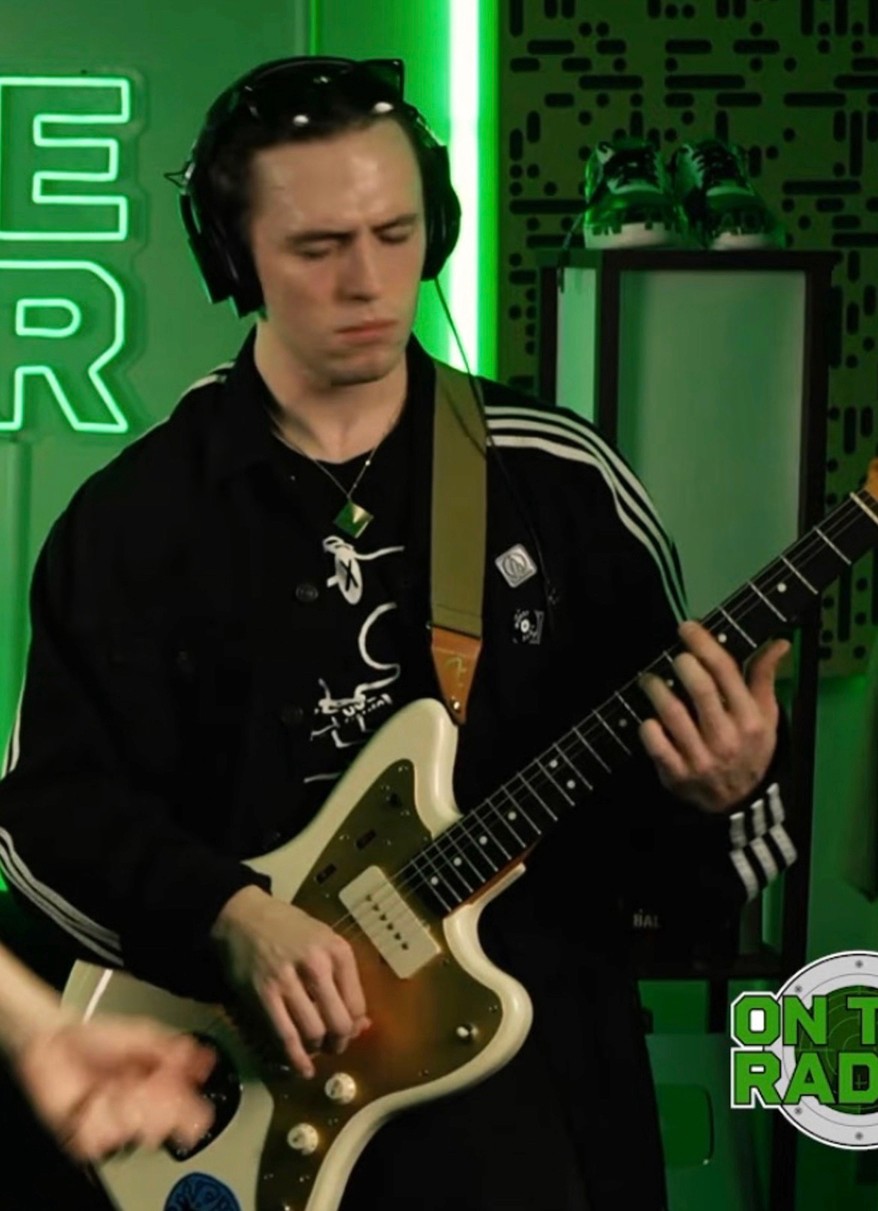
What piece of advice would you give to the new generation of music producers who want to work with established artists and build real careers in the industry?
Take your ego out of the room, first and foremost. It’s not about you, and you’re not the most important person in the room. You’re there to serve. Study the greats, because there’s so much information online from people who’ve already done it in the music industry. There are free gems out there that are worth millions of dollars. I’d recommend the recent Jimmy Iovine interview. He talks about serving, and this is someone who was around John Lennon and Bruce Springsteen. He wasn’t there to play guitar or write for them, but he could engineer the session. So early on, fill the needs of your peers and other creatives wherever you can.
Develop your craft and put in your time. You can go wherever you want, but don’t be afraid to identify where that actually is. If you want to be the biggest artist in the world, great, but be real about what that looks like. For me, I want to be a diamond producer. That means I need to be doing records with all different kinds of artists, identifying the sounds I like to make and the sounds I don’t, and staying true to myself. You’re in the driver’s seat. This is your career, and you get to decide where you want to go.
Finding your why is one of the biggest things that will separate you. Ask yourself why you make music. Once you really understand why you’re doing this, you can go as far as you want to go. Don’t just say, “I make music because it’s fun.” Think a little harder. Think about who you want to be in the world and why your music sounds the way it does. For me, I want to inspire people to believe in themselves, trust who they are, and know there’s nothing wrong with them. I want people to feel a sense of catharsis when they hear my music.
So trust yourself, know you’ve got it, and put your time in. Also, don’t be afraid to reach out and put yourself out there. The worst that can happen is someone says no. If they do, great, keep asking, because eventually someone will say yes. And once that door opens, you better be ready to run through it.
What plans do you have for this year, both personally and professionally?
Get money. No, obviously making money matters, but that’s not the main priority. Right now, I’m in a great position, and I’m really grateful for where I’m at. I’m making enough from the music I’ve produced to live off it right now, so after July 4, I’m planning to go to LA and stay there for a couple of months.
Then in the fall, I have a North American tour coming up with overtonight. I’m going to be tour managing, DJing with him, and I’ll probably open before playing guitar with him. We’re doing about six weeks, so I’ll be done with the tour around October. From there, I’ll have to decide whether I want to stay in New York, stay in LA, or do something else. Part of me wants to just live on the road for a while, take a little Europe trip for a couple of months, and figure it out.
Right now, I feel like I’m planting seeds in different places, and I’m really grateful for that. I also have a good amount of music coming out, including records with Joony, some with Chlöe Bailey, work with KayCyy, and music with a few different artists. I also have four songs coming out with theMIND, who’s a Chicago legend and a really great artist. We’ll see what happens, though. I’m sure we’ll talk in a year, and some song I never expected to drop will be out. Everything’s kind of up in the air, but in a good way.
Follow Stephenthethird on Instagram: @stephenthethird
More Blog Posts
See our latest blogs