Exclusive Interview
Produced by: Rudy Manager
Edited by: Rudy Manger & Andrej Aroch
Nascent – Producer Behind SZA, Kanye West & 50 Cent
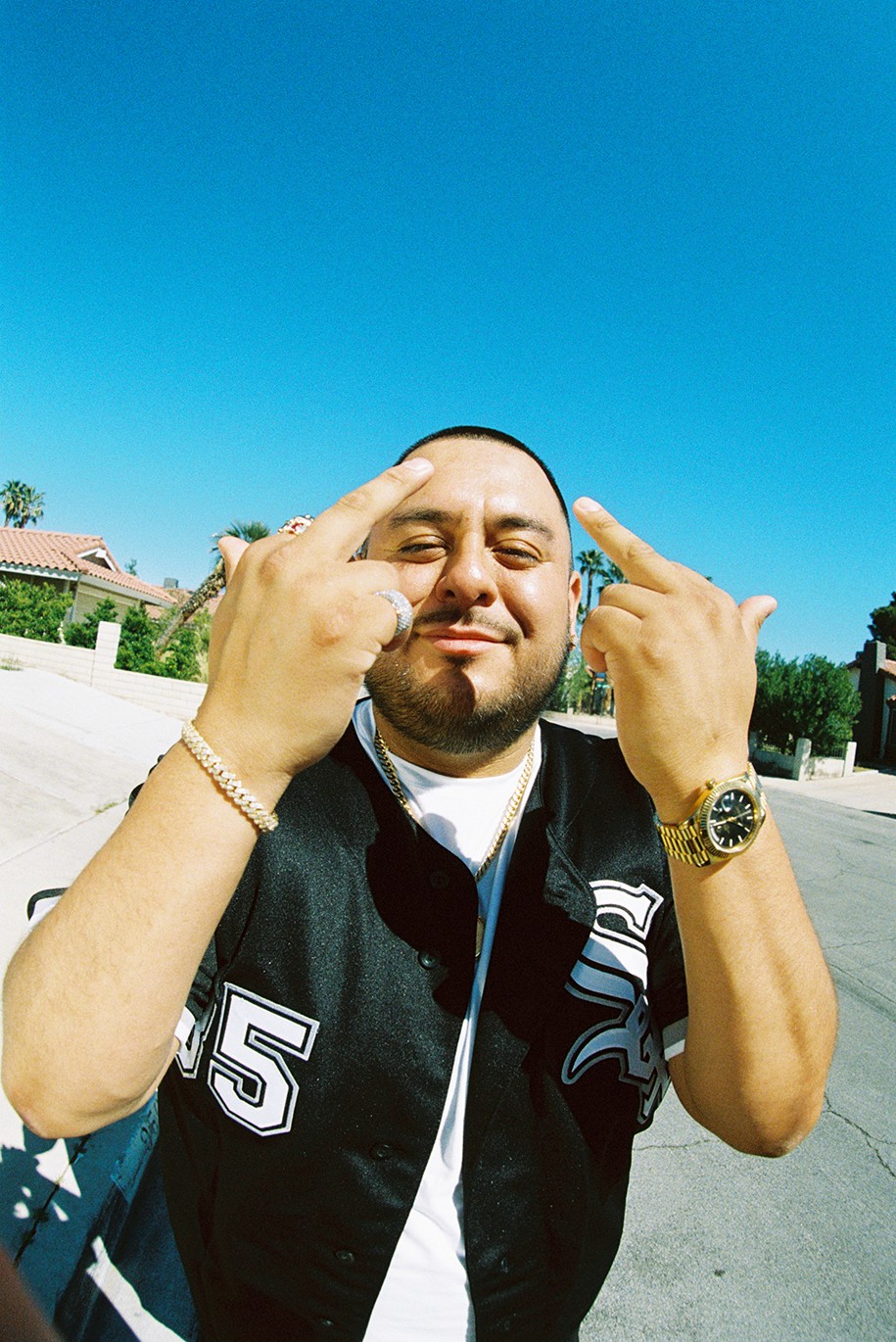
Nascent is a highly respected, Chicago raised, Los Angeles based producer and artist who first stepped onto the big stage by producing for 50 Cent. He then went on to craft records with the likes of Kanye West, SZA, Brent Faiyaz and many more, all while building his own albums that reflect his world and vision. In this Studio Talks interview, we dive into his journey, from his early days coming up to stories from Dr. Dre’s personal studio and the making of “Good Days” for SZA. We hear his perspective on his album DON’T GROW UP TOO SOON and what is next for him. He also offers advice for the new generation of producers navigating the music industry. This interview was conducted via video call by Rudy Manage on November 25, 2025.
“As long as you stay consistent, stay disciplined, and put the work in every day, it’s only a matter of time. You will be rewarded.”
- Nascent
For people who aren’t familiar with your work, can you briefly introduce yourself and the kinds of projects you’ve worked on?
I go by Nascent, and I’m from Chicago. I’ve been producing music for a long time now. I started out in Chicago working with a lot of up and coming acts. My sound started off a bit more in the street rap world around 2009, and from there it just grew and evolved into what it is now. I started working with 50 Cent, and that was my first major placement when I was about 18 or 19 years old. From there I just kept steadily building up my résumé and really used that to my advantage to meet other artists and people in the industry. I’ve done work for a lot of artists like 50, Kanye and SZA. I’ve produced for so many different artists. I’ve been doing this for a little while already. I started young, so I think that’s probably why it feels like I’ve been doing it for so long.
What was your process for improving back then? Did you have any mentors, or were you mostly learning from online tutorials?
When I started coming up in music as a producer, the internet was very helpful, even though it wasn’t as resourceful as it is today. Now there are tutorials on YouTube where producers show you their process and how they made certain songs, and we didn’t really have that growing up. I’m 36 now, so my era was really MySpace, futureproducers.com, the SoundClick era. In the online community I was part of, we pushed each other. We would send each other music and that kept us motivated, because there was always this competitive energy to it.
As far as mentors, I didn’t have a mentor who told me how to do this or that. I learned on my own through trial and error. Moving to LA was definitely an eye opener. I was in a city full of so many talented people, and it made me realize I still had a long way to go. It pushed me, because people were coming from all over the US and all over the world to chase this dream, and they were all very talented. That was a real eye opener for me. It’s like making it to the NBA and realizing all these guys can play basketball, so you’re not the man anymore.
In a previous interview you mentioned that you passed Dr. Dre’s test at his studio. Could you talk a bit more about that moment and how it came about?
That was a few years ago. My boy BJ the Chicago Kid is an artist as well and one of my really good friends. He just told me, “Hey, let’s go to Dr. Dre’s birthday party.” I was like, “Okay, cool.” Then I started thinking, what do you even bring Dr. Dre? We just showed up to his birthday gathering. It was cool, because it wasn’t what I expected. I thought it was going to be this huge thing, but it was actually pretty chill. BJ introduced me to Dr. Dre and told him we were working on an album together. Dre was like, “Oh, you produce?” Then he asked me if I had any beats on me. I told him I had my phone, not my laptop. He said, “All right, cool, let’s go downstairs.” So in the middle of his own birthday celebration he was still excited about music, and I thought it was really cool that he brought us all down to his studio.
The whole test part was him asking me to play music. I was playing beats, but I realized they weren’t what I should be playing for Dr. Dre. Maybe it would’ve worked for SZA or J. Cole or somebody else, but I had to remind myself this is Dr. Dre, Mr. NWA, he wants some hard s**t. After everyone had been passing around the aux cord, a light bulb went off and I asked for it back. I went into my old 50 Cent folder from around 2012 and played a beat. He just started going crazy. He started hitting me on my shoulder like, “Yeah, motherf***er, this is the s**t I’m talking about.” He did the whole song and everybody was just dabbing. That’s when I felt like, okay, I passed the test, because before that he kept saying no to things. I didn’t take offense, because he’s Dr. Dre and there’s a reason he’s Dr. Dre. He demands a certain level. I didn’t get discouraged or flustered. If anything, it motivated me to really think about what I should be playing. It was cool. I was telling people I had a whole pep in my step all week. You couldn’t tell me s**t. I was like, “Man, bro, I’m sitting next to Dr. Dre at the SSL board and he’s asking me what I think about how he said this word.” It felt like a dream.
What do you like to do first when you open your DAW?
I usually start with drums, and then I go through my folders of samples and compositions that some of my friends make. A lot of guys make loops now, but I don’t even like calling them loops. They’re compositions. They sound so good that they feel like actual samples from records. I go through all that music and just pick random things. I don’t really overthink it. I just pull from here and there and then see what I can do with it. That’s one way of working. Another way is to do jam sessions with some of my friends who are musicians and producers as well. We’ll just jam out, then go back, take parts from the session, find the good sections, and use those. There are many ways to start an idea, but if I’m at home by myself making a beat, I usually start with the drums.
Do you have any kind of creative routine before you start working on music?
No, I don’t really have a routine like that. I just make sure I do something every day. It might be making a beat, chopping a sample, making a new sample, or composing something. My discipline is just to always show up and shoot my free throws. That’s how you stay sharp. A lot of times it will be something you made on a random Tuesday that ends up changing your life a year later, and you wouldn’t even know it at the time. It doesn’t always happen in some big moment where your whole life suddenly changes. Sometimes it’s just that you showed up that day and later you get rewarded for it. So every day I try to make sure I do something creative, but I don’t have a set schedule or a fixed start time. I just prefer working during the day. That’s my only preference. I can’t do the overnight sessions anymore. Those are too much. I’m getting too old for that s**t.
What are some of your favorite VSTs, synths and hardware gear?
I mean, I love the Mellotron, I love Memorymode, and the Juno is really nice. I really love the sound of the Juno, and the Roland JD-Xi is really cool too. I use Reason as my DAW. I also use standard stuff like Keyscape, and a lot of what I do is live. I prefer to do jam sessions, so it’s just your basic rhythm section: drums, bass, keys, and sometimes guitar. I like creating in a room with real people.
How do you feel about where music is right now, especially hip hop, and where do you see it going in the next few years?
I like where music is at, because there’s a lot of good music, but there’s also a lot of bulls**t too. Making music is so accessible now that anybody can do it, which creates an oversaturation. I don’t listen to what I don’t like, so if I don’t like something, I just don’t play it and it doesn’t bother me. I also understand some things aren’t for me. Some things are for fourteen or fifteen year olds. I think it’s important as a producer to stay young and not be so stuck in your ways. You gotta be flexible and open to adapting, growing, and evolving.
That’s how you get to be a Kanye West or a Dr. Dre or certain producers who’ve had long careers, because they don’t stick to only one thing or one sound. They’re open to what’s happening and what the new thing is, and they figure out how to incorporate it and make it their own. As far as where it’s going, I don’t know. I just hope we can figure out a way for artists to make more money from their streams. I think that’s super important, along with retaining ownership, so I’d like to see more improvements on the business side.
From a creative perspective, I feel like AI is going to play a huge role, and it’s already playing a big role in how we create music. I still want to make music with real people, but I also understand there are ways you can use AI to your advantage or as a source of inspiration. We should always try to stick to making music as humans, especially the ones who are making real art, because that’s something more spiritual. You’re tuned into something that’s giving you that, and that’s important. AI is just a computer.
What kind of music do you like to listen to in your free time?
I listen to everything. I listen to hip hop, but I don’t start my day with hip hop or rap. I like starting my day with something more relaxing, like Erroll Garner or some soul music, something easy that doesn’t feel so intense. Then I’ll get to the harder stuff later. I listen to hip hop, rap, corridos, Mexican music, soul, and alternative music. I listen to a lot of different things. I just love music and I love hearing all types of it.
Is there a specific production of yours that feels especially close to your heart?
There are so many that really mean a lot to me, but I think “Good Days” by SZA is extra special because of how it happened and who I made it with. It was the perfect combination of getting to make music with my friends and making the kind of music we like to make. We weren’t trying to sound like anyone else. Then it ended up with an artist like her, SZA, and it blew up into one of her biggest songs. There were a lot of factors that made that moment so special for me.
Could you share a bit more about how you made “Good Days?”
“Good Days” started with an idea between me, Los Hendrix, and Carter Lang. I’d been working with Carter in Chicago for years already, and around 2018 we were working on Chance the Rapper’s music. Los Hendrix, another producer and collaborator I work with a lot and one of my best friends, sent me this guitar loop as a voice memo on my phone. That loop is the “Good Days” guitar loop. He was in a session with another artist and sent it asking me, “Hey bro, what do you think of this? I’m playing this in the studio and no one is really reacting.” I was like, “Bro, this is beautiful.” So I took the voice memo and made a beat out of it, then sent it back to him. He was like, “Wait, when I get home, I’m going to polish it up,” and he did.
When I got the beat back, I was at home in Chicago. As soon as I heard it, I was like, “This is going to be for SZA.” A lot of us producers will make music and say, “Yeah, this is for Kendrick” or “This is for J. Cole,” and you base that on what they’ve done before. A lot of times you send them that music and they’re like, “Nah, I already did this,” or maybe it’s just not for them. Usually they want something you didn’t think they would want. This was one of those moments where I got it right, like, “Yeah, this is for you.” They heard it, they loved it, they wrote to it, and they did it.
It has been a year since you released DON’T GROW UP TOO SOON. Is there a song on there you feel most connected to, or is it more about the whole project for you?
The whole project is about me. The album was made from what I was living and experiencing, so the whole album is connected to that and it holds a special place for me. I think I knew it was something special once it started gaining momentum while I was making it. When you start getting those songs that click, you begin to see what you were really thinking. It’s like a puzzle and suddenly you’re like, “Okay, I see it now.” I knew it was special because it was me being honest about what I was really going through. I feel like when you’re relatable and vulnerable, people connect with that. They see themselves in it and they realize we’re all human, we all go through s**t, and we all have our own things going on. We’re all works in progress.
I think when you’re in a space where you can create art, share it and influence people, and they can relate to you, they feel seen and want to support you. So the whole thing, the rollout and everything around it, was a special moment. It feels different when you know you’re tapped into something and you’re getting that confirmation. That project will always be a special moment in my life. Even with the artists I put on there, a lot of them are newer. Maybe they’re not super big artists yet, but look at someone like Sailorr. She’s blowing up now, and she’s someone I found on SoundCloud years ago. Hearing her, I could already see what she could be.
Are you working on anything new that fans can look forward to in the near future?
Yeah, I’m working on the third album now. It’s going to be called Already Won, They Just Forgot to Clap. The plan is to drop that album next year, in 2026.
What advice would you give to the new generation of producers who are just coming up and want to establish themselves in the industry and start working with artists?
I would tell them to stay disciplined and spend every day learning, creating music, and understanding that it’s important to network and hustle with the people around you. When I say “you guys,” I mean the people in your circle. You’re all gonna help each other out as you keep going up. Of course we all wanna reach high and work with bigger artists, and there’s nothing wrong with that, but don’t forget about what’s right next to you. That’s how I did it. Building relationships is super important. Being self aware is super important too. I don’t think producers talk enough about studio etiquette or just being self aware in a room and knowing when it’s enough to just be there and play your part.
As long as you stay consistent, stay disciplined, and put the work in every day, it’s only a matter of time. You will be rewarded. But you can’t be entitled and be like, “Oh, how come this isn’t happening for me?” Don’t worry about what that person is doing or why that person is getting something you’re not. That has nothing to do with your business. Focus on you. Do you. Stay down. That’s it. It’s gonna work out. It always does.
Speaking of studio etiquette, what should producers keep in mind when they first step into the studio with an artist?
I would say what works for me, especially when I’m working with new artists, is to worry about the music later and just get to know the person first. Treat it like a date. Making music is vulnerable. I can be in my room by myself making a beat and making a lot of mistakes and no one is there with me, so it doesn’t matter. But when you’re doing that in front of people, it can be a little intimidating. To ease the energy, I think it helps to just talk. Ask where they’re from, what kind of music they like, maybe have them play you some of the music they’ve been working on, and you play them some of yours. Get to know the person, and I guarantee the process of making music will be so much easier after that. The artist will feel more comfortable.
As producers, we have to remember the artist is going to remember the experience they have with you. They’re going to know if you were difficult, weird, or rude, and it doesn’t matter how talented you are. People would rather work with someone who’s easier to be around than with a f***ing weirdo. That would be my advice for every producer, new or not. Just relax. I do understand though, because producers for the most part are in the background, not in the front, and we like to be in our own world.
Where do you see yourself one year from now?
A year from now, my only concern is putting this album out. That’s it. This time around the process has been a little more difficult. A lot of the artists I’ve been working with are bigger today than they were three years ago, which is a good problem to have. They’re on tour, they’re working on their own records, they’re going through their own personal things, they’re busy. So there have been a few more obstacles to get where I need to be, but I’ll get it done.
I know how to be patient, because I understand it’s not about my timing. I might want something out today, but it doesn’t work that way. So I’m just going to stay patient while I put this project together. My biggest goal is to drop this album next year.
Is there anything else you would like to add?
If I had to add anything, and I don’t know if I touched on it in the interview, it would be this. As a producer and as an artist, ask questions about your business. Learn how to read your contracts, learn how to read your royalty statements. Just because someone tells you one thing or another doesn’t mean you should just accept it. You need to be on top of your business. I say that because I’ve seen situations happen to me where people tried to do something, but because I read all my stuff and know what’s going on, I was able to prevent it. I wonder how many producers don’t read their royalty statements or don’t understand the difference between certain terms and words. Please educate yourself on how you’re running your business. These are things that will affect you in the long run, so ask questions and make sure you understand how your business is working. That would be my biggest thing for sure.
That’s super important, especially for the newer producers who are just coming out.
Yes, I get it. We’re creatives and some of us don’t want to have anything to do with that, but ignorance is not an excuse. You need to be on top of your stuff, because there’s a lot of money out there that you could potentially be missing out on just because you don’t want to look at that side of things. So it’s definitely important.
Follow Nascent on Instagram: @nascentbeats
More Blog Posts
See our latest blogs